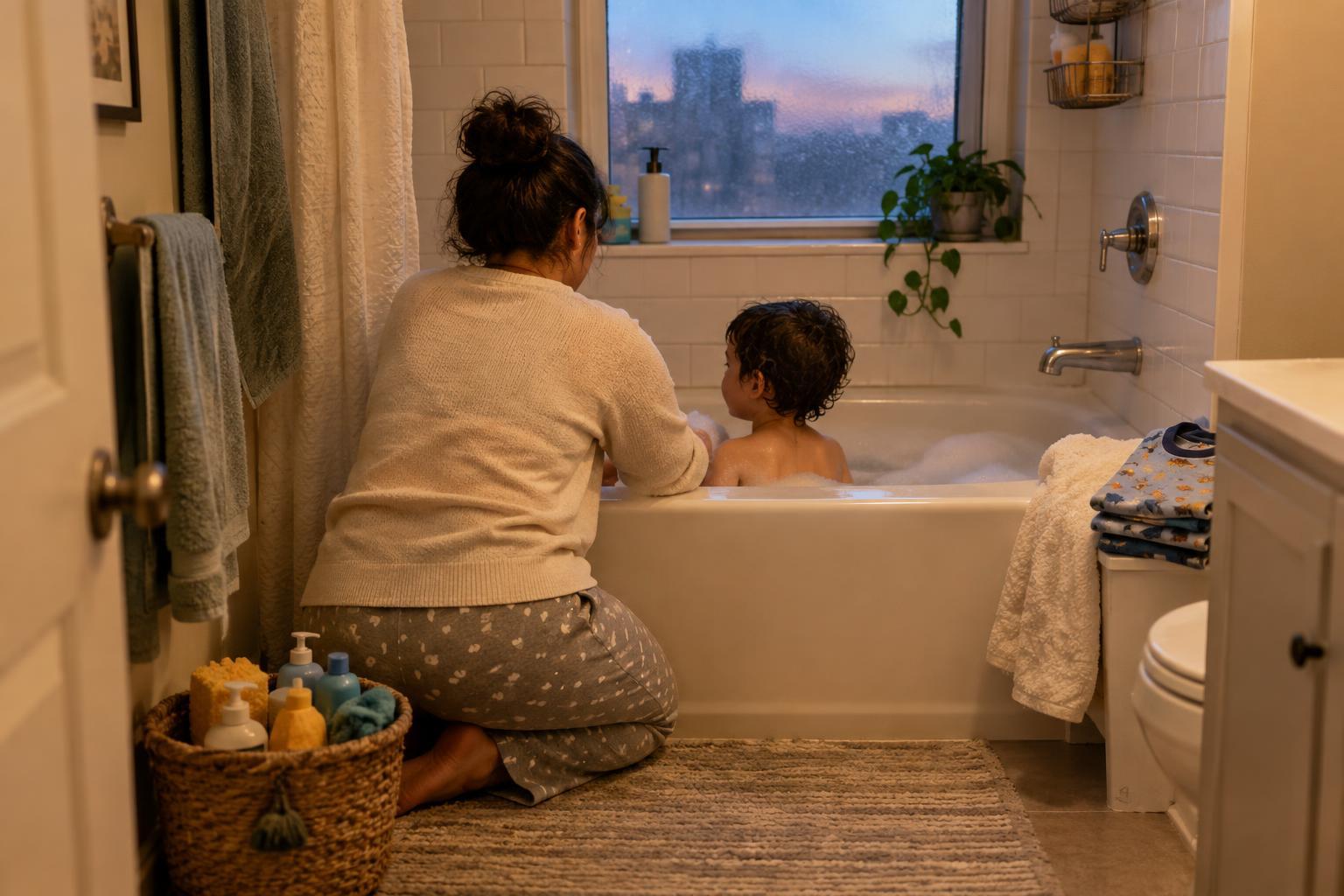
Decide what bath time needs to accomplish
On a busy evening, it helps to separate what is necessary from what is optional. If your child needs a wash after a messy day, focus on getting clean rather than creating a long activity. If a bath is simply part of the usual bedtime rhythm, it can be brief. Not every evening needs bubbles, toys and an extended play session.
Think about where the bath fits alongside dinner, homework, cleanup and bedtime. Some families find it easier to bathe children before everyone is tired; others prefer to wait until after dinner. The best place for it is the one that leaves enough time to wash, dry off and get dressed without a last-minute scramble. A predictable order can help children know what comes next, even when the exact time changes.
Set up before turning on the water
Gather a towel, washcloth, cleanser if you use one, clean clothes and any needed diapering supplies before the bath begins. In a small bathroom, keep the essentials in one reachable basket or on a shelf that stays dry. This reduces trips out of the room and makes the routine easier for whichever caregiver is handling bath time.
Preparation also makes supervision simpler. Young children need a caregiver present and attentive throughout a bath; do not leave them alone in the water, even briefly. If the doorbell rings or something else needs attention, take the child out of the bath with you. Check that the water feels comfortable before they get in, and keep supplies close enough to use without stepping away.
Keep the sequence short and familiar
A simple sequence might be: put clothes in the hamper, wash, have a few minutes to play, rinse, then wrap up in a towel. Saying the steps in the same order gives children a clear beginning and end. You can offer one small choice, such as which washcloth to use or which toy to bring, without turning every step into a negotiation.
For children who enjoy bath play, a small set of easy-to-rinse toys is often enough. Cups or washable containers can make the water interesting without creating much cleanup. If toys tend to delay getting out, save play for after washing and give a clear cue when it is nearly time to finish. The goal is not a perfectly timed bath; it is a routine that feels manageable for the people doing it.
Plan for the transition out
Getting out can be harder than getting in, especially when a child is having fun. Let them know what will happen next before pulling the plug or lifting them out. A familiar phrase such as “one more pour, then towel” can make the ending less abrupt. Keep the towel ready so they can get warm and dry right away.
Afterward, aim for as few steps as possible. Put pajamas where you will use them, and decide ahead of time whether hair drying or detangling is part of that evening’s plan. If the bathroom is shared, a quick wipe of wet surfaces and a place for damp towels can keep the space usable for the next person. These small finishing tasks are easier when they are part of the routine rather than surprises at bedtime.
Make room for imperfect evenings
Some evenings will run late, and a full bath may not fit. Your family can still keep a familiar bedtime pattern by choosing a shorter cleanup when appropriate and moving on to pajamas and a story. On another night, when there is more time, bath play can be the main event. Flexibility can make the routine more sustainable than trying to follow the same schedule regardless of the day.
Notice which part of bath time causes the most friction. If finding supplies is the problem, restock the basket. If getting out is difficult, work on a consistent ending cue. If everyone is tired, try moving the bath earlier when possible. Adjust one thing at a time, and give it a few evenings before deciding whether it helps. A manageable routine is one that supports the rest of family life, not one that has to look the same every night.