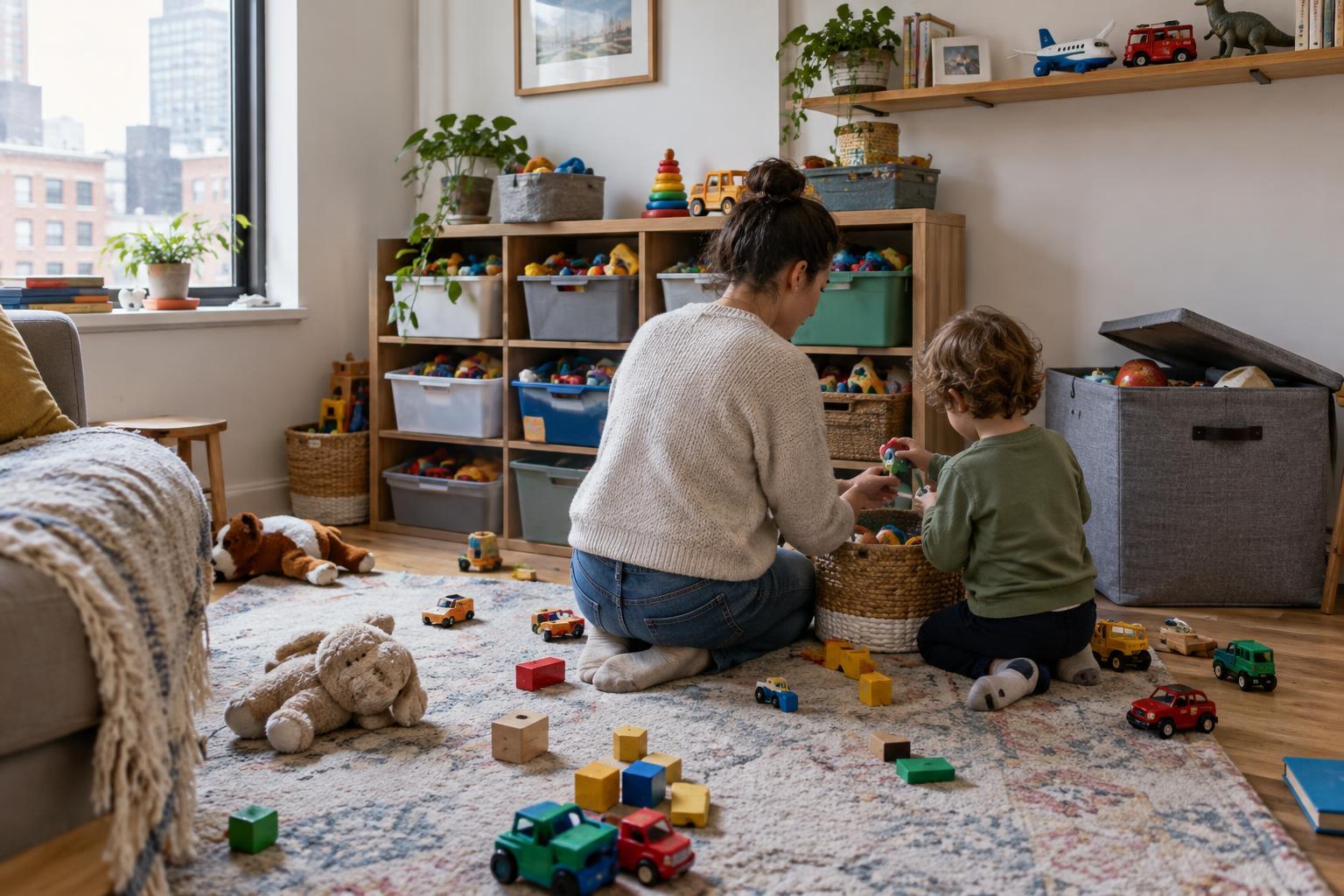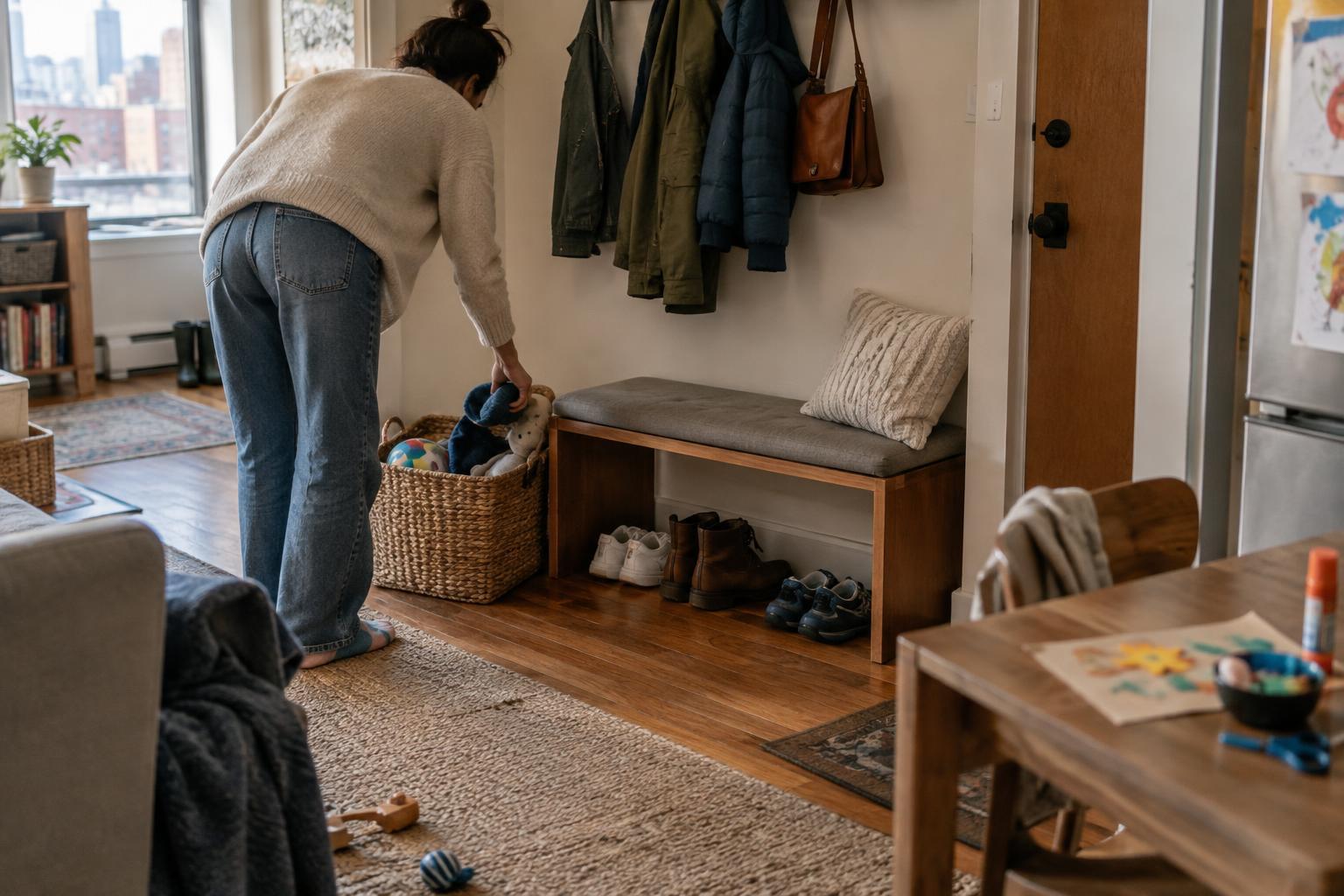
Start with what the bathroom needs to hold
When cabinet space is limited, the first step is deciding what belongs in the bathroom at all. Empty one drawer, shelf, or cabinet at a time and group its contents by use: daily care, bath time, cleaning, spare supplies, and items no one uses. Check containers for leaks and discard empty packaging. A quick sort reveals which products are competing for the same small space.
Keep the things your household reaches for every day close to where they are used. Backups of soap, unopened toiletries, and extra towels may fit better in a hallway closet or another dry spot. If you share the bathroom with children, think about who needs access to each item. Everyday washcloths can be easy to reach, while cleaning products, medicines, and sharp grooming tools should be stored securely out of children’s reach.
Give the sink area a clear job
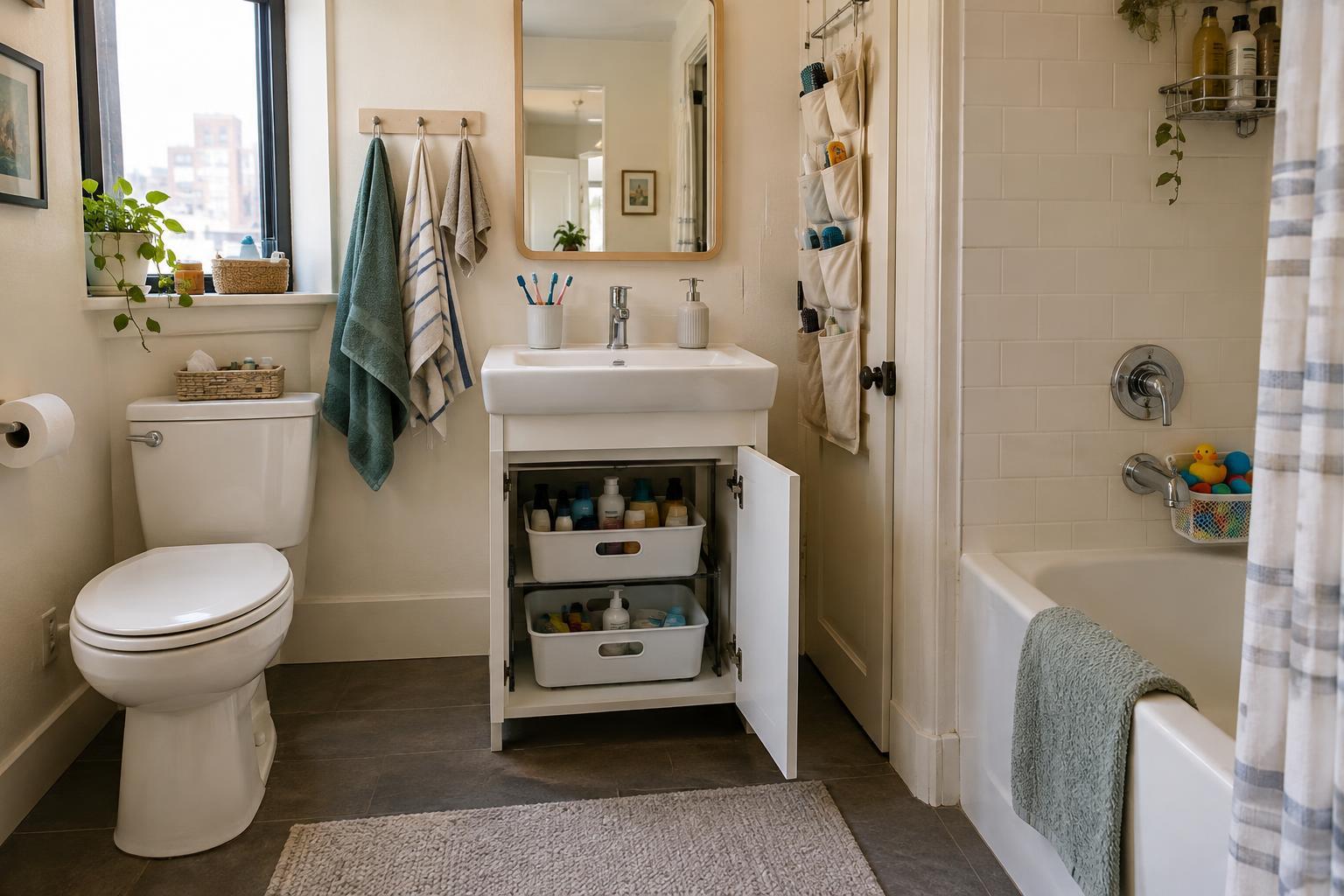
The sink is often where clutter gathers because everyone stops there several times a day. Aim to leave enough open counter space for handwashing and wiping down the surface. A small tray or cup can hold the few items that must stay out, such as hand soap and toothbrushes. Everything else needs a specific home nearby or elsewhere.
Inside a shallow drawer, small washable containers can separate hair ties, toothpaste, and grooming supplies. Under the sink, bins make it easier to pull items forward instead of losing them behind pipes. Measure the space before buying organizers, including the clearance around plumbing and the cabinet door. Repurposed containers can work just as well if they fit, are easy to clean, and let everyone see what is inside.
Use walls and doors without crowding the room
Vertical space can help when cabinets are scarce. Hooks for each person’s towel, a narrow shelf above the toilet, or a door-mounted organizer may free up valuable drawer space. In a rental, check what can be installed before drilling. Adhesive hooks can be useful for light items, but they may not hold well on every surface, especially in a damp room.
Keep wall storage selective. A packed shelf can make a small bathroom feel harder to use and harder to clean. Put lightweight, frequently used items where they can be reached without climbing, and avoid placing heavy or breakable containers overhead. If you use a door organizer, make sure it does not stop the door from closing or create a place where little fingers could get caught.
Make bath time supplies easy to put away
Bath toys, washcloths, and bottles can spread across the tub even when the rest of the room is organized. Choose one container or designated spot for toys rather than adding more storage each time the collection grows. A basket that lets water drain can make it easier to clear the tub after use. Let items dry as appropriate before storing them in an enclosed cabinet.
It can also help to keep a small, ready-to-use set of bath supplies in the bathroom and store duplicates somewhere else. If several family members use different products, group each person’s items in a labeled bin or caddy. The goal is not to make every product visible at once; it is to help each person find what they need and return it when they are done.
Build a reset that fits family life
An organized bathroom needs a simple way to return to order. Try a short evening reset: hang towels, put bottles back, clear the sink, and move laundry to a hamper. Place the hamper where damp clothes usually land if space allows. Labels can help children participate, but broad categories such as “hair” or “bath” are often easier to maintain than a separate spot for every object.
Revisit the setup when routines change. A child who can reach a hook independently may be more likely to use it; a bin that constantly overflows may need fewer contents rather than a larger replacement. The best arrangement is one your household can keep using on an ordinary busy day, with clear surfaces, safe storage, and a place for the things that matter most.