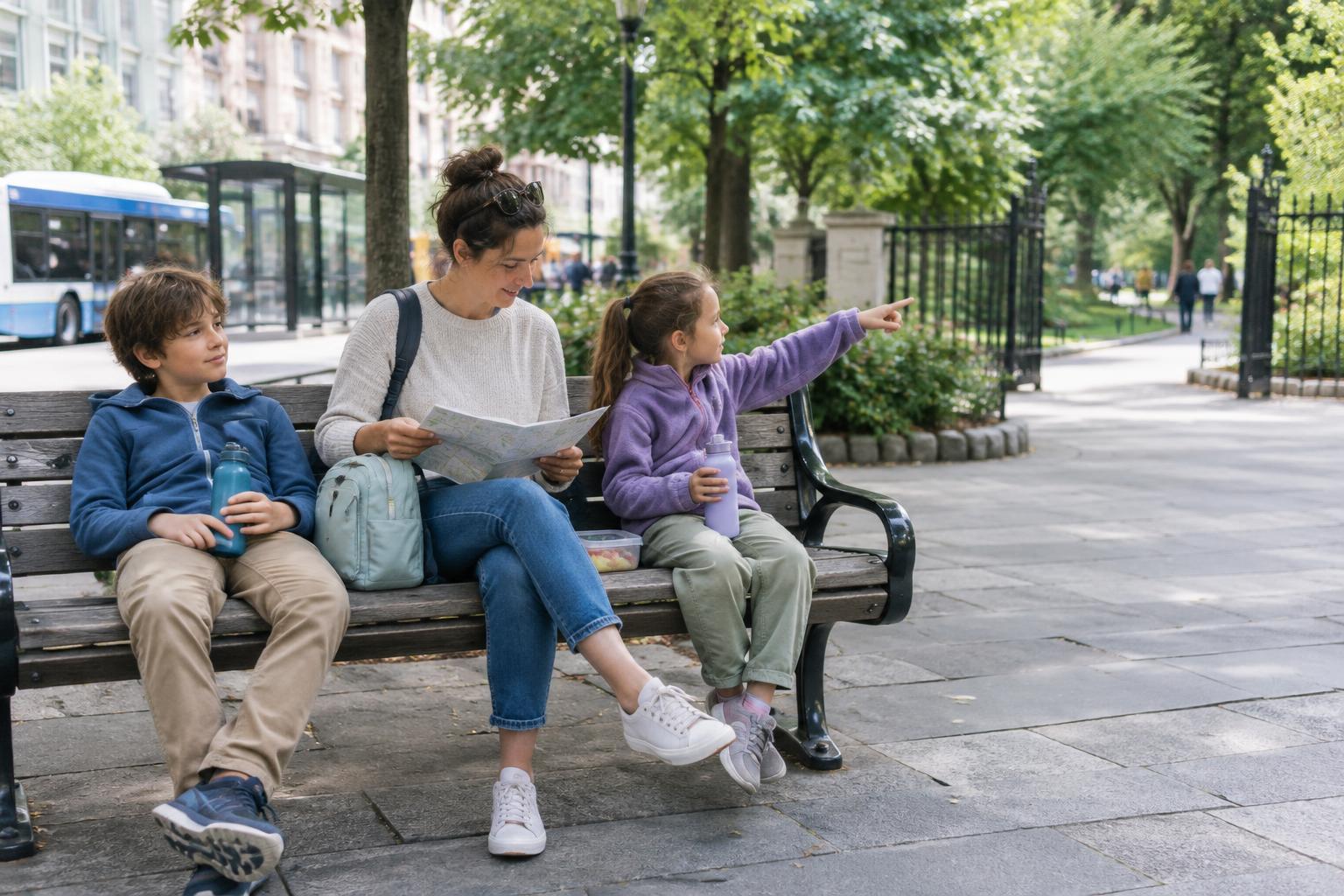
Choose the outing that fits your family
Start with the kind of visit you want, rather than trying to see everything a park offers. One family might enjoy a short walk with views of boats and bridges; another might want space to run or a place to sit with a snack. Queens has different kinds of waterfront settings, from promenades to larger park areas. Look at a park map before you go and pick one main destination, such as a path, a play area or a good stopping point for a picnic.
Consider the full trip, not just the time in the park. A stroller-friendly route may matter more than the park’s size, while older children may be happy to walk farther if they know what they are going to see. Check the route from your transit stop or parking spot to the entrance, and note whether restrooms, drinking water and accessible paths are listed. Facilities and access can vary, so it helps to confirm details before leaving home.
Pack for wind, walking and small delays
Waterfront weather can feel different from weather a few blocks inland. A light extra layer, sun protection and a refillable water bottle are useful even when the visit is meant to be brief. Bring snacks that are easy to eat without a table, plus a small bag for wrappers if a trash bin is not nearby. For younger children, a change of clothes or a few wipes can turn a minor spill into a quick reset rather than the end of the outing.
Keep the bag manageable. If you are traveling by bus or train, you will appreciate having your hands free for doors, stairs and children. A compact blanket can make a patch of grass or a bench feel like a destination, but you do not need to bring a full picnic. Before setting out, decide what can stay at home; the best outing kit is one you can carry comfortably on the way back.
Set waterside boundaries before exploring
A clear rule is easier to follow when everyone hears it before reaching the water. Tell children where they may walk and where they need to stay beside an adult. Point out railings, path edges and any areas that are off-limits. Do not assume that every stretch of shoreline is meant for touching or entering the water. Follow posted signs, and choose a different activity if a spot feels too crowded or hard to supervise.
Give children a job that keeps their attention on the surroundings without encouraging them to lean over an edge. They can count passing boats, look for different shapes in the skyline or notice how the water changes when the wind picks up. If you are visiting with more than one child, agree on a meeting point and a simple signal for stopping. These small plans make it easier to enjoy the view together.
Make room for unhurried play
A waterfront visit does not need a packed schedule. Try a short “notice walk”: ask each person to find one sound, one color and one interesting shape. Children can sketch a bridge, invent a name for a passing boat or compare the view from two safe spots along a path. These activities work without special supplies and can be shortened whenever attention shifts.
Build in pauses. Sit for a snack, watch the water and let children tell you what they want to investigate next. If there is a playground, treat it as a bonus rather than the whole plan; it may be busy or farther from the entrance than expected. A familiar game, such as I Spy, can fill a wait while the family decides whether to keep walking or turn around.
Leave while the outing still feels good
Before you begin, choose a flexible turnaround point: a landmark, a snack break or a rough amount of time outdoors. The return trip can take longer when children are tired, so save some energy for it. A reminder that you will head back after one more stop can make the transition less abrupt. If the day is going well, you can always stay longer; if it is not, a short visit still counts.
On the way home, ask everyone to name one thing they noticed. You may learn that the best part was a boat, a breeze or the snack on a bench—not the destination you expected. Keep that detail in mind for next time. A repeatable waterfront routine is often more useful to a family than an ambitious one-day itinerary.