Start with the spaces you need this week
A weekly reset is not a deep clean. It is a short check of whether your home is ready for the routines ahead: getting out the door, preparing food, finding school or activity supplies, and settling in at night. In a busy family home, especially one with limited storage, that is a more useful goal than making every room look finished.
Before you begin, walk through the places everyone uses most. Notice what is in the way, what is hard to find, and what will create extra work if left until tomorrow. Pick two or three priorities from that list. You might clear the kitchen table, empty a crowded entryway, and gather laundry needed for the next few days. If time is tight, those jobs are enough for a reset.
Put away items that slow down daily routines
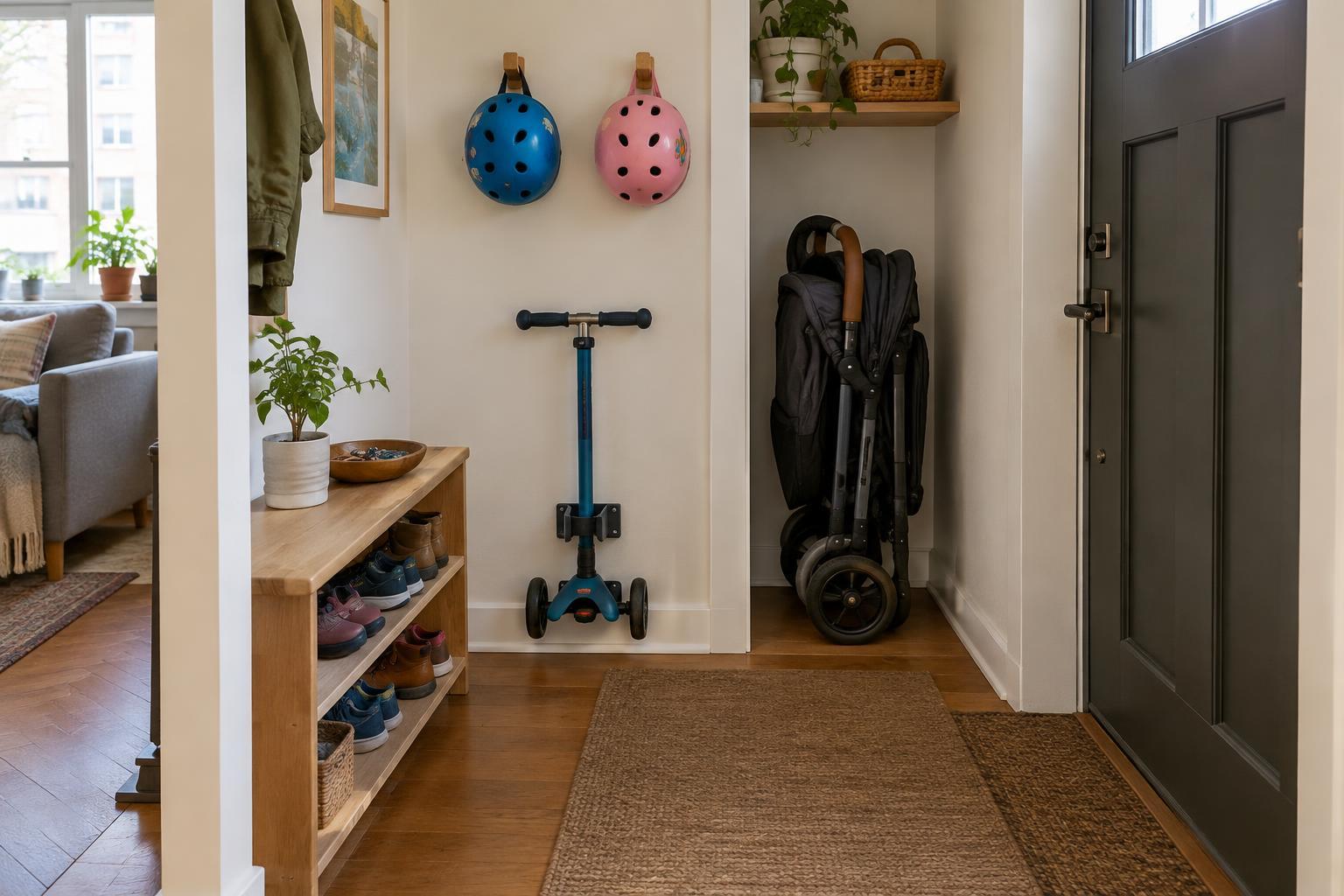
Start with objects that have a home and are likely to be needed soon. Hang up coats, return shoes to their usual spot, and put keys, bags, and transit cards where they can be found on a rushed morning. In the kitchen, clear dishes from eating surfaces and put away food that belongs in the fridge or pantry. These tasks give shared spaces back their purpose.
Next, collect items that have traveled between rooms: library books on the couch, art supplies on the floor, or hair ties on the table. A basket can help you carry them in one trip. Ask children to return a few familiar items rather than sorting an entire room at once. If something has no sensible home, set it in a designated spot for later instead of stopping the reset to reorganize a closet.
Contain the projects that are still in progress
Not every object left out is clutter. A puzzle in progress, a school project, or a child’s carefully arranged play scene may be something the family intends to return to. Decide together whether it can stay where it is until a specific time, or whether it needs to move so the space can be used. A tray, shallow box, or shelf can preserve a project without taking over the dinner table.
The same approach works for papers. Put time-sensitive forms and notices somewhere they will be seen, then gather drawings, mail, and other papers into one review pile. You do not have to make a permanent decision about every page during the reset. The immediate goal is to keep important items visible and stop loose papers from spreading across shared surfaces.
Let low-impact chores wait
Some jobs are worthwhile but do not need a place in every weekly reset. Reorganizing a toy collection, matching every stray sock, sorting keepsakes, and wiping the inside of each cabinet can usually wait if the basic routines are working. Starting one of these jobs when you are already tired may leave a bigger mess than the one you meant to fix.
A useful question is: will leaving this alone make the coming week noticeably harder? If the answer is no, write it on a separate project list or simply leave it for another time. There is no need to replace a long cleaning checklist with a long list of deferred chores. The point is to distinguish maintenance that helps now from projects that deserve their own time.
Finish with a small handoff to the week ahead
End by making the next routine easier. Check that bags are where they belong, the table has room for a meal or homework, and any supplies needed soon are easy to reach. Take out trash or recycling if containers are full. Then stop. A clear ending matters: without one, a manageable reset can expand until it feels like an entire afternoon of housework.
Your reset may change from week to week. A rainy weekend indoors might mean putting away more games; a week of outings might leave more bags and shoes by the door. Keep the method flexible: clear the paths you use, return the items you need, contain what is unfinished, and let the rest wait. The aim is a home that supports family life, not one that hides all evidence of it.