Begin with a dependable starting point
The hardest part of homework is sometimes getting started. Rather than setting a rigid start time for every day, choose a dependable first step: unpack the school bag, have a snack, or check what is due. A familiar sequence gives children a way into the task even when the evening looks different from yesterday. On a day with an outing or a late trip home, the sequence can happen later or be shortened.
Keep the setup modest. A clear patch of table, a pencil, and a place to put finished work may be enough. If several people share the same space, store supplies in a small container that can move when dinner or another activity needs the table. The goal is not a perfect homework station; it is a place where the next step is easy to see.
Make a small plan before opening the books
Spend a few minutes looking over the work together before anyone begins. Ask what needs to be finished, what can be started tonight, and which task feels easiest to tackle first. Some children prefer to build momentum with a quick assignment; others want to handle the hardest task while they have energy. Let the plan reflect the child and the evening rather than following one rule every time.
Write the plan in a short list if that helps. For example: read, take a break, finish the worksheet, pack the folder. A visible list makes it easier to return after an interruption and gives the child a chance to mark progress. If the list is longer than the time available, identify the priorities instead of rushing through everything without a pause.
Treat breaks as part of the routine
A break works best when everyone knows it is coming and what happens afterward. You might pause after one assignment, a section of reading, or a manageable stretch of focused effort. Breaks can be simple: get water, stretch, look out the window, or walk around the room. The right length and activity will vary; the useful test is whether the child can return to the next step.
Give the break a clear ending without making it feel like a punishment. A timer may help some families, while others do better with a cue such as, “After your snack, we’ll do the last two questions.” If a break routinely turns into a struggle, try changing its timing or activity. Homework should not require a battle over every pause.
Leave room for uneven days
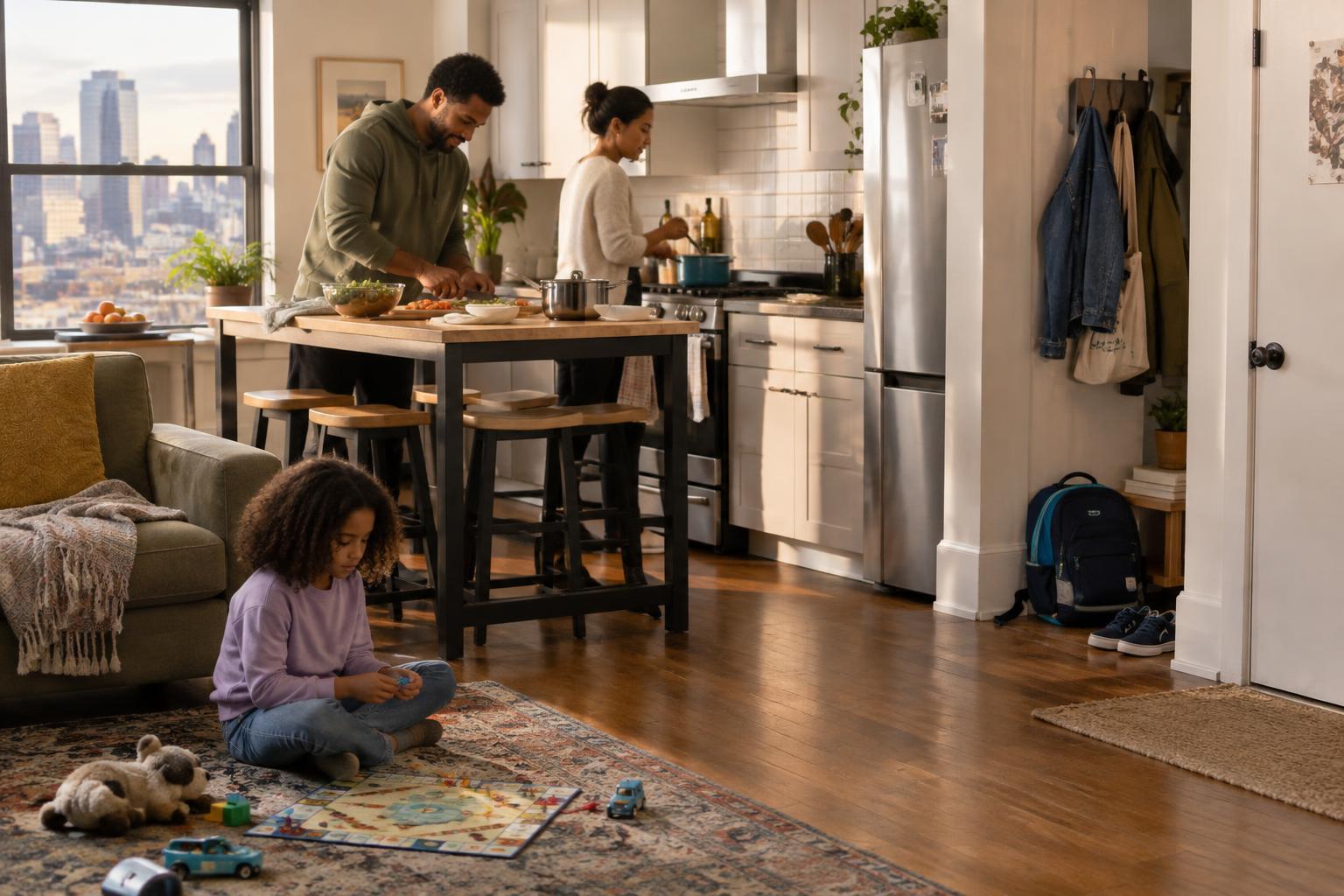
City family schedules can shift with commutes, shared spaces, errands, and siblings’ needs. A flexible routine has a normal version and a shorter version. On an ordinary evening, there may be time to review the assignment list, work in chunks, and check the school bag. On a crowded evening, the plan might be to handle the most pressing task, pack what is needed for tomorrow, and stop.
Flexibility also means noticing when a child needs more support with the process. You can help read directions, clarify the first step, or sit nearby while they begin without taking over the assignment. If the workload or instructions repeatedly seem unmanageable, a calm note to the teacher can help clarify expectations. You do not have to solve that question in the middle of a tiring evening.
End with a reset, not a perfect score
A short closing ritual helps tomorrow start more smoothly. Put completed work where it belongs, return supplies to their container, and check whether anything needs to go back to school. Then name what is left, if anything, without turning the end of homework into a long review of mistakes. An unfinished task is easier to address when it is visible rather than forgotten at the bottom of a bag.
Over time, invite the child to help adjust the routine. Ask which starting step makes it easier to begin, whether breaks come at useful moments, and what tends to interrupt the plan. Keep what works and change what does not. A homework routine is useful because it provides a way to begin, pause, and begin again—not because every evening goes exactly as planned.