Plan around the room’s real jobs
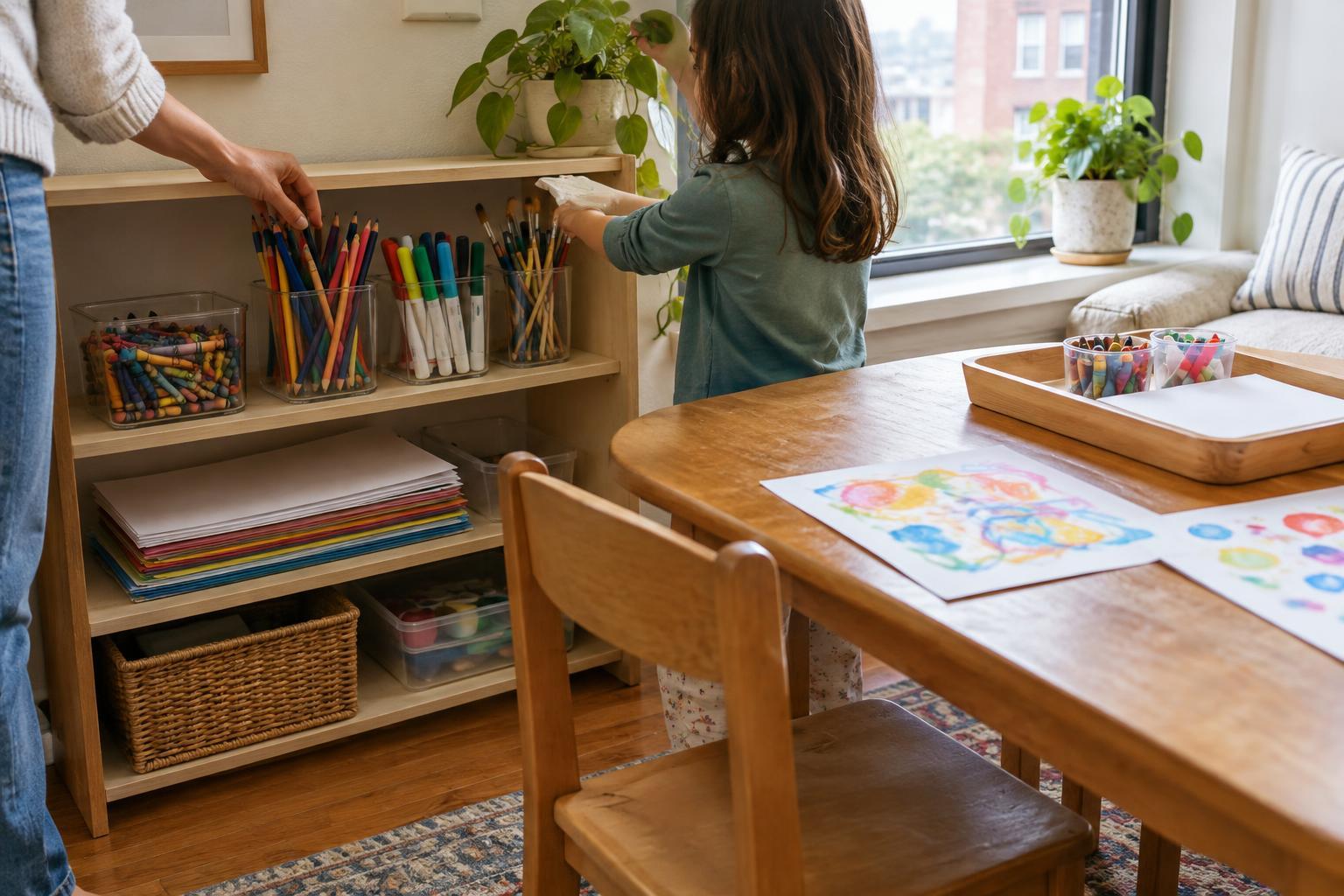
A shared bedroom does not have to hold every toy, book, and activity the family owns. Before moving furniture or buying containers, list what actually happens there: sleeping, getting dressed, reading, quiet play, or perhaps homework. In a compact city home, deciding what belongs elsewhere can make more difference than adding storage. Art supplies used at the kitchen table, for example, may be easier to keep near that table than in the bedroom.
Walk through a typical morning and bedtime. Notice where clothes pile up, whether a child can reach their pajamas, and which items get left on the floor. Keep the things used daily in easy-to-reach spots; place occasional items higher or outside the room. Leave a clear path to beds and doors. A layout that works on a busy weekday is more valuable than one that only looks tidy when no one is using it.
Make ownership visible
Children sharing a room do not necessarily need matching amounts of furniture, but each benefits from a few predictable places that are theirs. A shelf, drawer, bedside basket, or section of a bookcase can hold personal treasures and current favorites. Labels, colors, or simple pictures can show whose space is whose without requiring everyone to remember a complicated system.
Talk together about which belongings are shared and which need permission before use. A small display spot for each child lets them choose what stays in view, even if most storage is communal. If one child needs more room for clothes and another for books, the spaces need not look identical. The goal is for both children to know where their belongings go and to have some say over the area they use.
Use zones instead of dividing the room in half
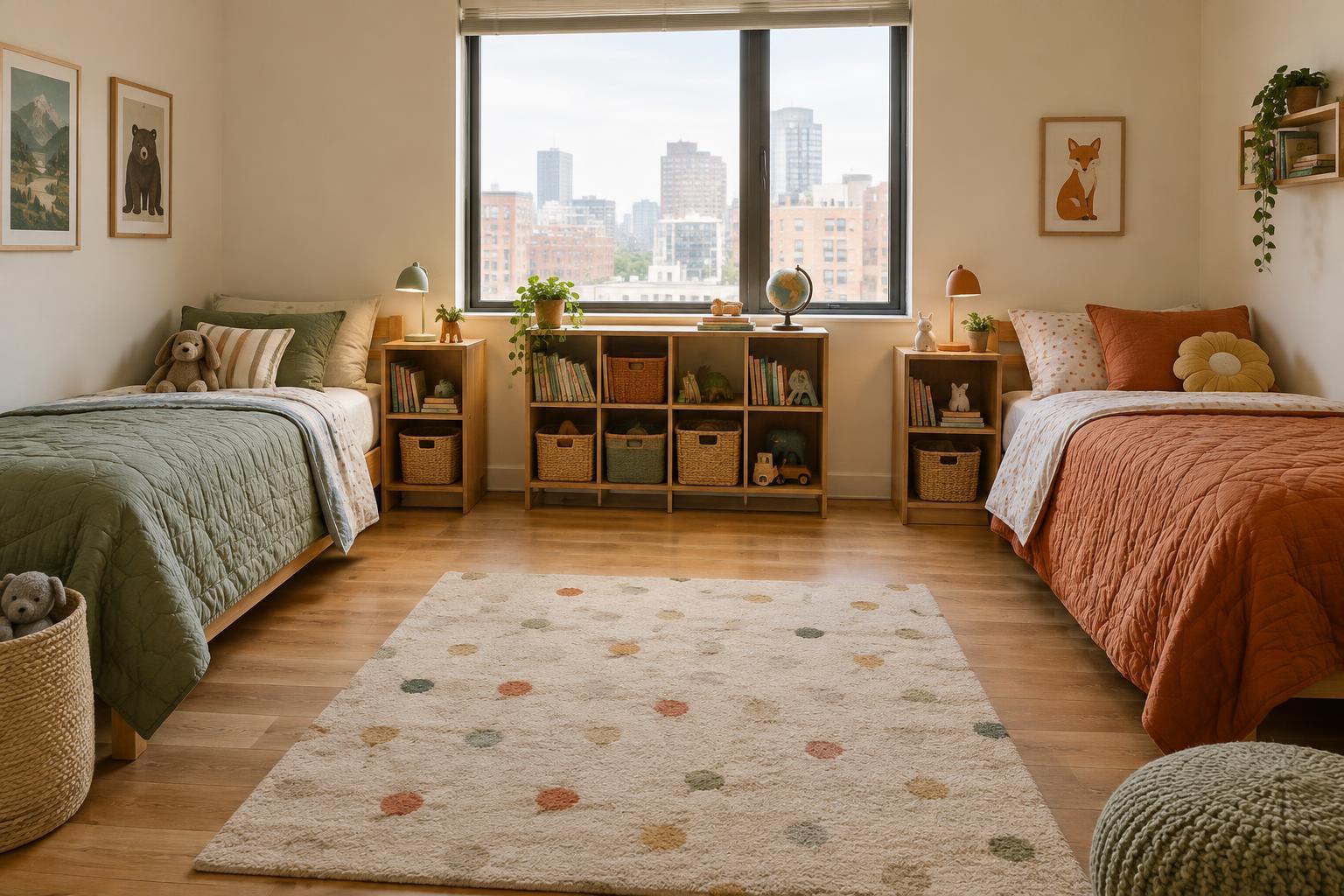
A strict line down the middle can be hard to maintain when beds, windows, and closets are not evenly placed. Try arranging the room by activity instead: sleep near the beds, clothes near the closet, and shared books or games in one common spot. This reduces the number of places to search during a rushed morning and gives children a clearer idea of where to put things away.
Personal space can be modest. A reading light, a small bedside surface, or a chosen piece of art may help each child feel that their bed area is distinct. If a curtain or divider appeals to the family, consider whether it blocks light, airflow, or a useful path before putting it up. Sometimes a visual cue, such as different bedding or a separate wall display, does the job without taking up floor space.
Choose storage children can actually use
The best storage is not always the one that holds the most. Deep bins can turn into places where small items disappear, while a few open baskets make cleanup easier to see and finish. Group belongings in broad categories such as dress-up clothes, building toys, and bedtime books. If a child has to sort every object into a narrow category, putting things away may become its own project.
Use the room’s height thoughtfully: less-used items can go on upper shelves, while daily clothes and toys should be within comfortable reach. Check that furniture and storage are suitable for the room and installed according to their instructions, especially if children may pull on or climb them. Before adding an under-bed box or another organizer, make sure there is still enough space to open it and reach what is inside.
Build in a reset and room to change
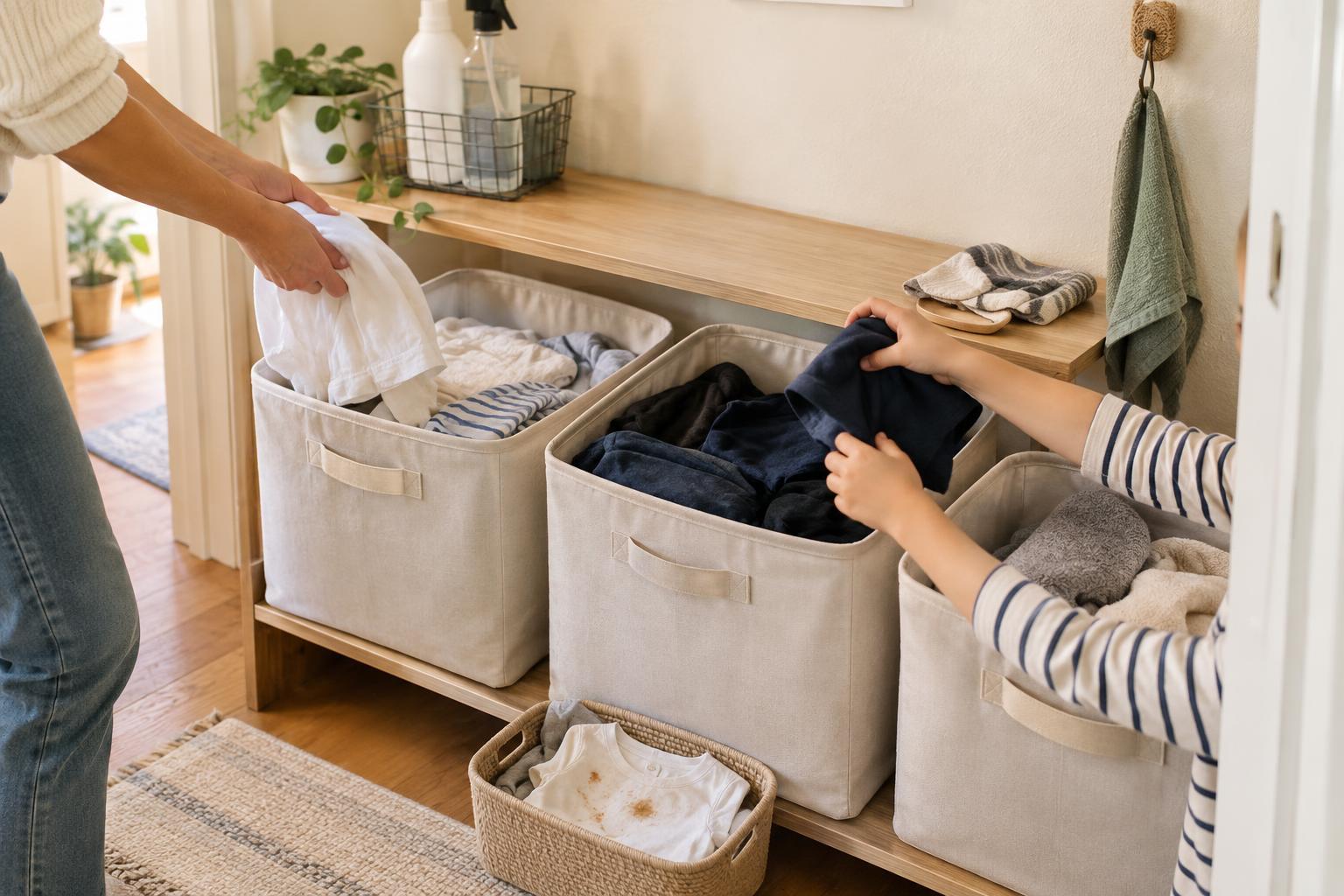
Even a well-arranged room will get messy. A short, predictable reset can work better than waiting for a major cleanout: return books to their shelf, put clothes in the hamper, and clear the path to the beds. Give each child a manageable task rather than asking both to “clean the room.” A shared basket for items that belong elsewhere can keep the bedroom from becoming a sorting station at bedtime.
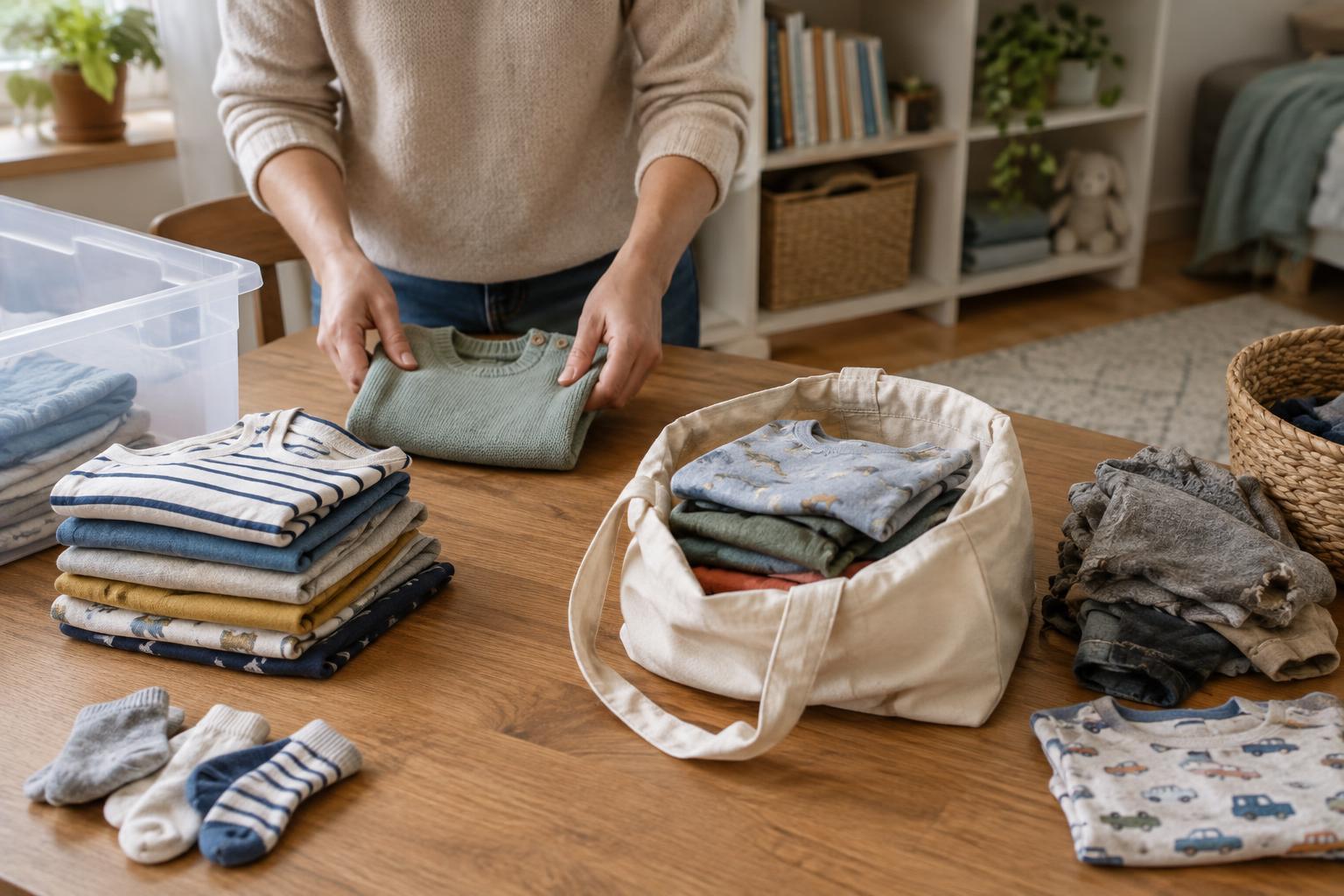
Revisit the setup when a routine changes or storage starts to overflow. Children’s interests and need for privacy may shift, and an arrangement that worked last season may no longer fit. Ask what feels crowded or hard to find before rearranging everything. Keeping a few surfaces and containers flexible makes it easier to adjust the room while preserving the personal spots each child has come to count on.