Start with what your family actually reaches for
A useful pantry begins with a look at how your household eats, not with a shopping trip for matching bins. Take everything off one shelf at a time and group similar foods together on a table or counter. Notice what gets used each week, what is kept for occasional meals, and what has been forgotten at the back. Check packages for damage and dates, and set aside anything you no longer plan to use. Working shelf by shelf keeps the job manageable, especially when pantry space is shared with dishes or cleaning supplies.
As you sort, think in terms of everyday tasks. Breakfast might call for cereal, oats, spreads, and lunchbox items. Dinner might rely on pasta, rice, beans, and canned tomatoes. Give the most-used foods the easiest-to-reach spots. Put occasional baking ingredients or extra packages higher up or farther back. The goal is not to make every shelf look identical; it is to make the next meal easier to put together.
Create a few clear zones
Broad zones are easier for a family to remember than a complicated sorting system. You might designate areas for breakfast, snacks, meal ingredients, baking, and backstock. Keep foods that are often used together near one another when space allows. If pasta and sauce live in different cabinets, for example, consider moving them closer so checking dinner supplies takes one glance.
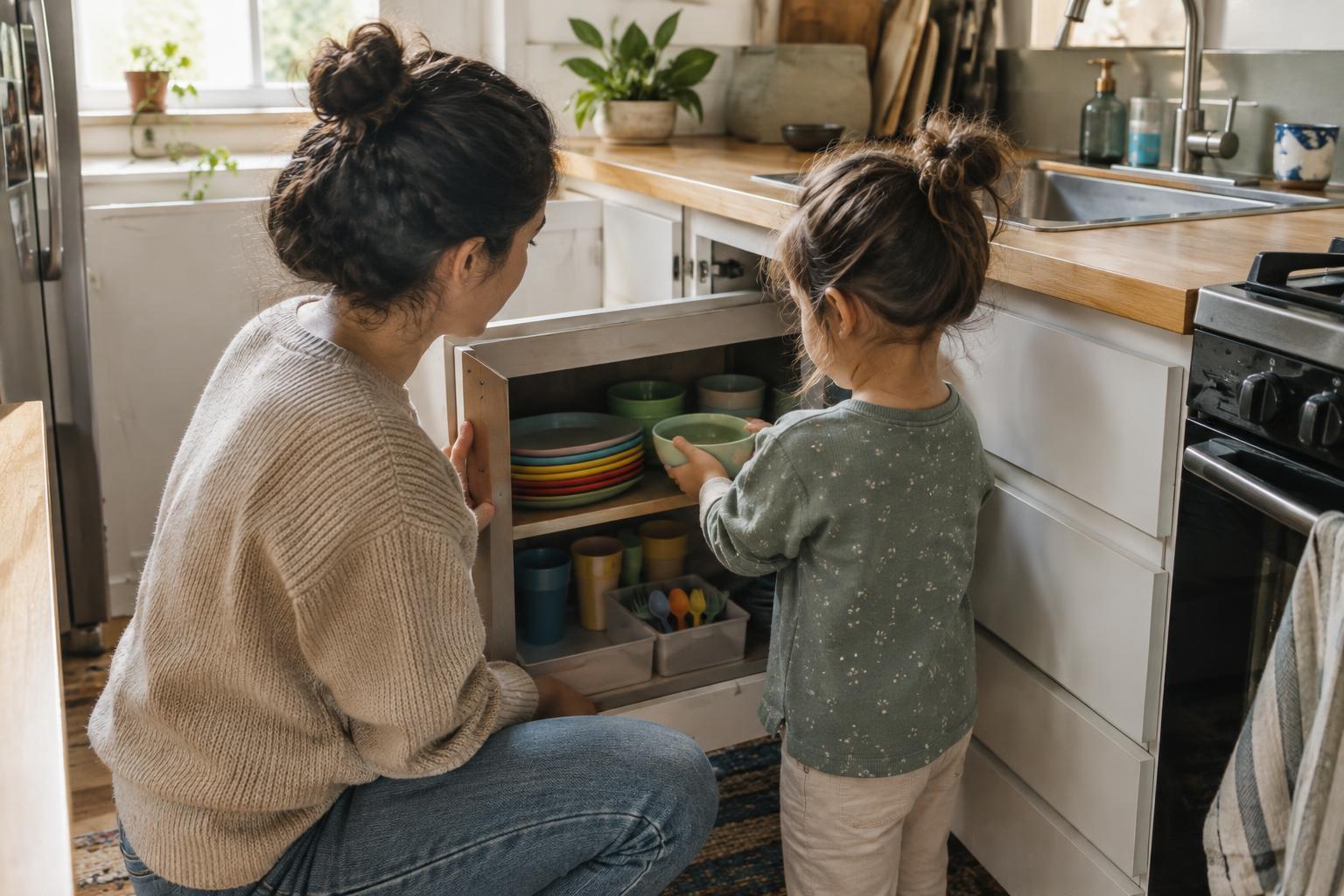
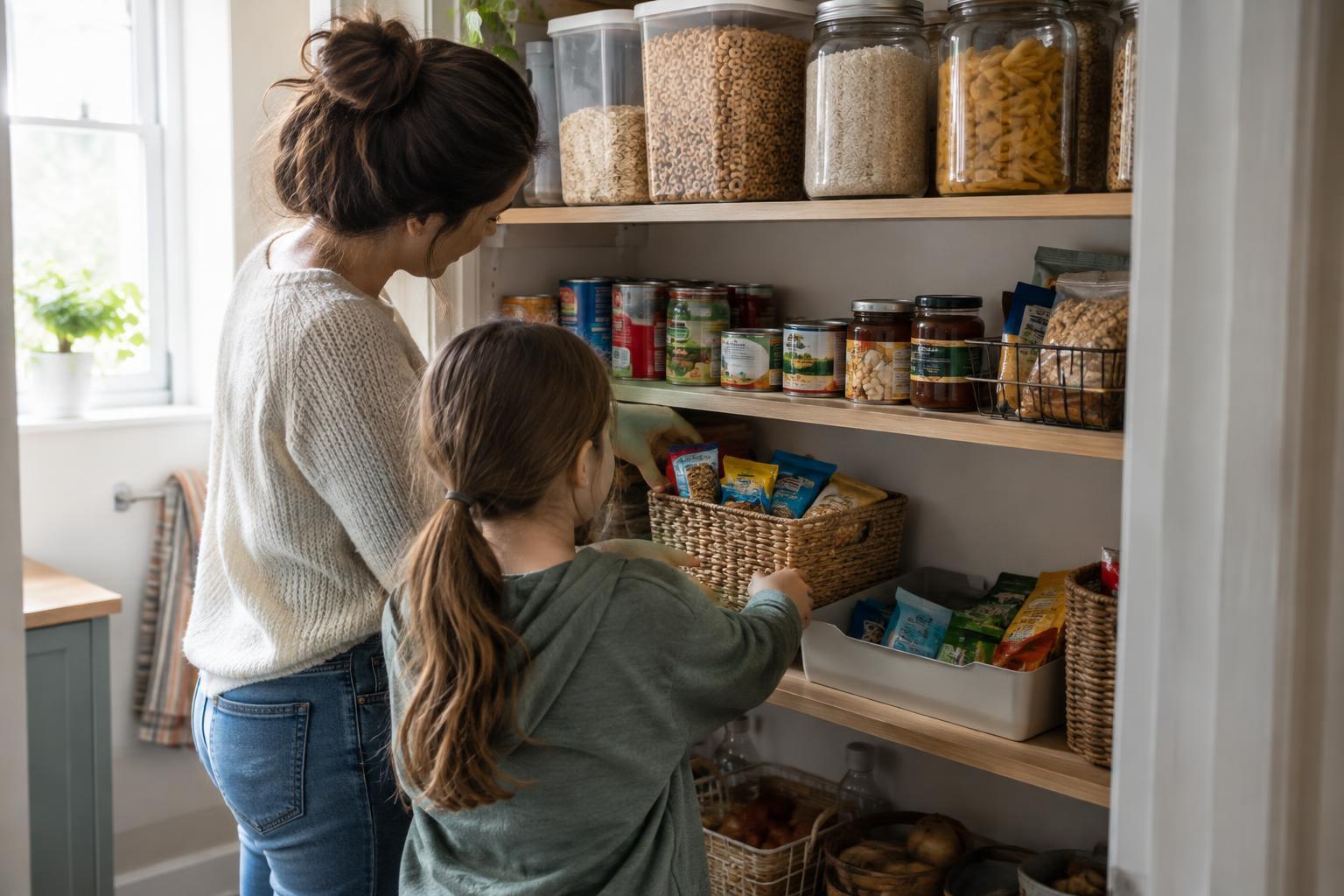
A zone can be a shelf, part of a shelf, or a simple bin. In a narrow city kitchen, a cabinet may do all the work of a pantry. Shelf risers can make short cans or jars visible, while a small bin can keep loose packets from spreading out. Leave a little breathing room if possible: a tightly packed shelf makes it harder to see what is there and easier to buy duplicates. Store heavy items on sturdy lower shelves, and keep food separate from household cleaners.
Make the system easy for everyone to use
Place family-approved, ready-to-grab foods where the people who use them can reach them. A low snack basket, for instance, can help a child find an option without pulling everything off a high shelf. Keep items that need adult help in a spot that makes sense for your household. Accessibility also matters for caregivers: frequently used ingredients should not require shifting several containers or climbing for every meal.
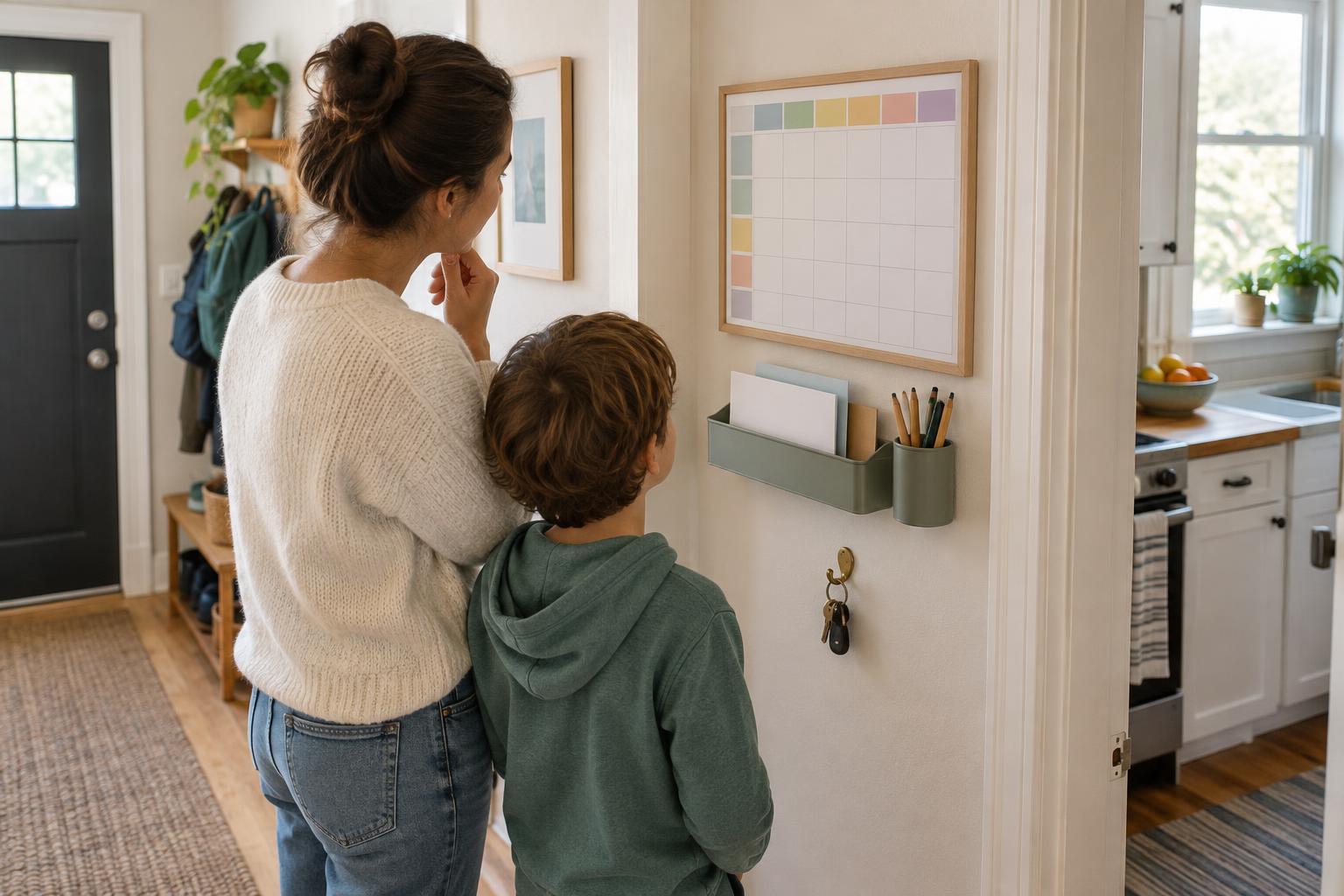
Labels can be simple and specific. Try “breakfast,” “lunchbox,” or “extra pasta” rather than assigning a separate container to every product. If younger children help put groceries away, picture labels or a familiar arrangement may be more useful than detailed text. Before buying organizers, test your zones with boxes or containers you already own. After a week, you will have a better idea of which categories need a bin and which work fine directly on a shelf.
Keep opened food visible and usable
Half-used bags and nearly empty boxes can disappear behind newer groceries. Give opened packages a consistent place toward the front of each zone, or use one small “use first” area for foods you want to finish soon. When adding groceries, move older packages forward and place newer ones behind them. This quick habit is often more helpful than transferring everything into matching containers.
If you do use containers, choose ones that fit both your shelves and the amount your family typically buys. Label them with the food name, and keep package information you may need, such as preparation directions or an expiration date. Clear containers can make quantities easier to see, but they are not required. A clipped bag inside a labeled bin may be the more practical choice for a small kitchen or a busy week.
Build a reset into a routine you already have
Pantries change every time someone makes a meal or puts away groceries, so plan for upkeep rather than a one-time perfect result. Before writing a grocery list, scan the zones you use most. Check whether a staple is low, bring hidden packages forward, and put stray items back in their homes. A short check while waiting for water to boil or unpacking a grocery bag can prevent a bigger sorting session later.
If a category repeatedly ends up in the wrong place, change the setup instead of blaming the people using it. A snack bin may need to move closer to the counter; an overflowing rice shelf may need a separate spot for unopened extras. Keep the arrangement flexible as schedules and meals change. A successful family pantry is one that helps everyone find food and put it away again, even on an ordinary busy day.