Start with a meal that can bend
Cooking together is easier when the meal does not depend on perfect timing or precise presentation. A build-your-own dinner, such as wraps, grain bowls or mini pizzas, gives everyone something to do while leaving room for different preferences. Keep the number of ingredients modest: one base, a few toppings and a simple side are enough. If dinner already feels rushed, try cooking together for a weekend lunch or an afternoon snack instead.
Before inviting children in, decide which parts of the meal they can help with and prepare anything that needs close adult attention. Set out ingredients in small bowls, clear a work space and put a damp cloth under a mixing bowl if it tends to slide. The goal is not to make every step child-led. It is to create a few genuine ways to participate while keeping the work manageable.
Match jobs to attention and comfort
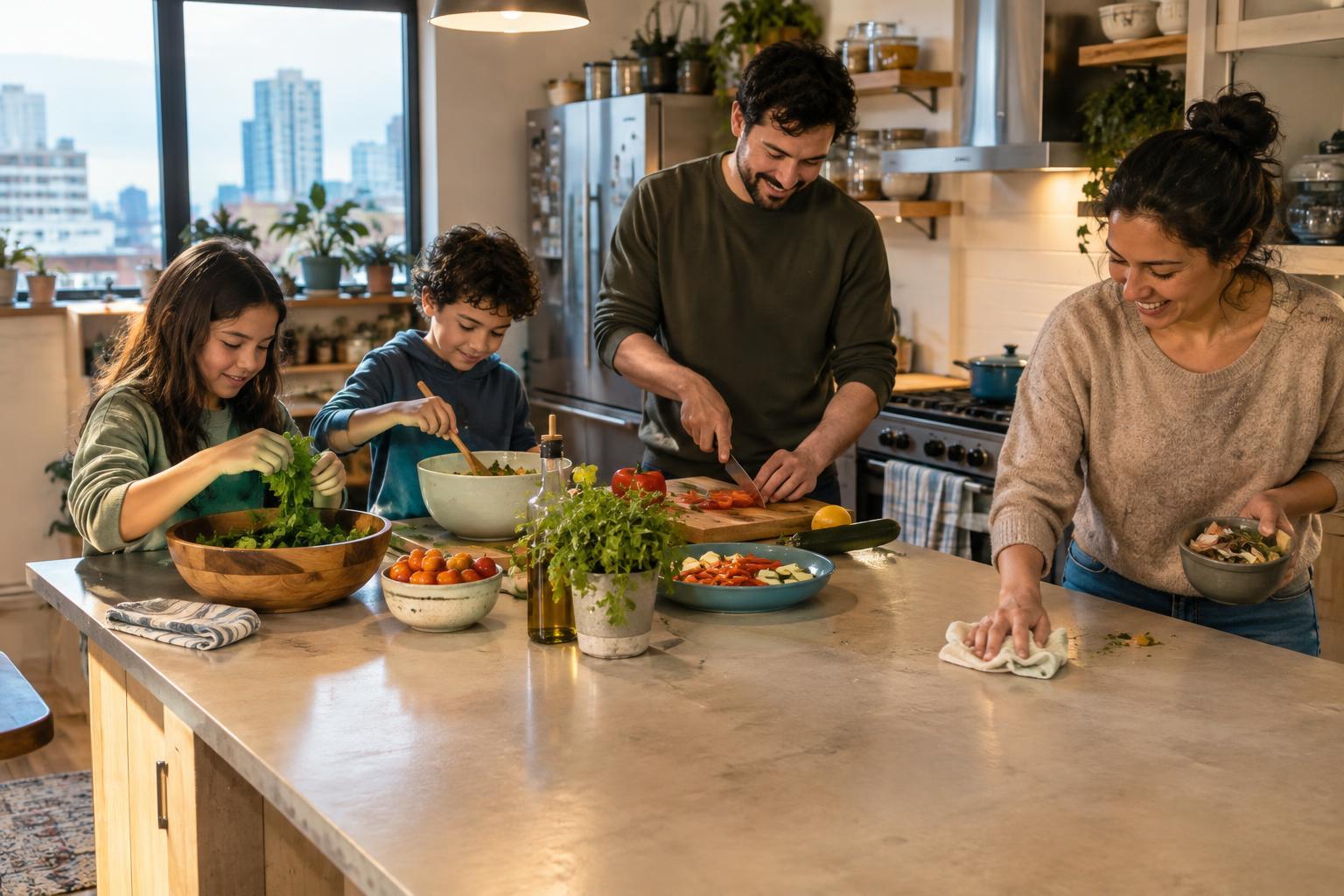
Children who are new to cooking can wash sturdy produce, tear lettuce, sprinkle toppings, stir a cool mixture or carry napkins to the table. Children ready for more steps might measure dry ingredients, mash soft foods, assemble their own portion or read the next instruction aloud. Choose jobs based on what a child can do comfortably today rather than on a fixed age rule. A child who would rather watch can start by choosing between two toppings or setting out plates.
Keep hot pans, sharp tools and appliances under adult control unless you have decided a particular task can be supervised safely. Explain where to stand and where to put hands before you begin. If you use a child-friendly tool, demonstrate it first and stay nearby. Short turns can help when several children want the same job: one washes, one mixes and then they switch for the next ingredient.
Make room for participation, not perfection
Family cooking may be slower and messier than cooking alone. Give children a task with a clear beginning and end, such as adding all the sliced peppers to a bowl or stirring until the ingredients are combined. That makes it easier to notice their contribution without correcting every move. If a topping lands unevenly or a wrap is folded in an unusual way, it may not need fixing.
Conversation can be part of the activity without turning dinner into a lesson. Ask which ingredient feels crunchy, invite someone to count the plates or let each person name a combination they want to try. Children can participate even if they do not want to taste something new. Offering a small choice and allowing them to pass on an ingredient keeps the mood more relaxed for everyone at the table.
Build cleanup into the cooking plan
A simpler cleanup starts before the first ingredient comes out. Place a bowl or bag nearby for scraps, keep a cloth within reach and use one tray to hold ingredients waiting to be used. As you finish with a measuring cup or bowl, move it straight to the sink or dishwasher. If counter space is limited, put away packages as soon as they are empty rather than letting them collect around the work area.
Give cleanup jobs the same clarity as cooking jobs. One child can return unneeded ingredients to their usual places; another can collect napkins or wipe a cool, cleared surface. An adult can handle hot cookware, sharp tools and any cleaner that requires extra care. A brief reset before eating—scraps cleared, spills wiped and dishes gathered—can make the remaining work feel less daunting after the meal.
Keep a repeatable family-cooking rhythm
You do not need a new recipe every time. Repeating a familiar meal lets children recognize the steps and choose a job with less explanation. Keep a short list of meals that suit your household’s time, space and budget, then rotate the toppings or side dishes when you want variety. On a busy day, family cooking might mean stirring a sauce together or assembling sandwiches, not making an entire dinner from scratch.
Afterward, ask a simple question: Which job would you like to do next time? Their answer can help you plan without turning the meal into a performance review. Some days the best shared activity will last ten minutes; other days there will be time to linger. What matters is having an inviting, workable way to spend a little time together.