Start with the activity, not the technology
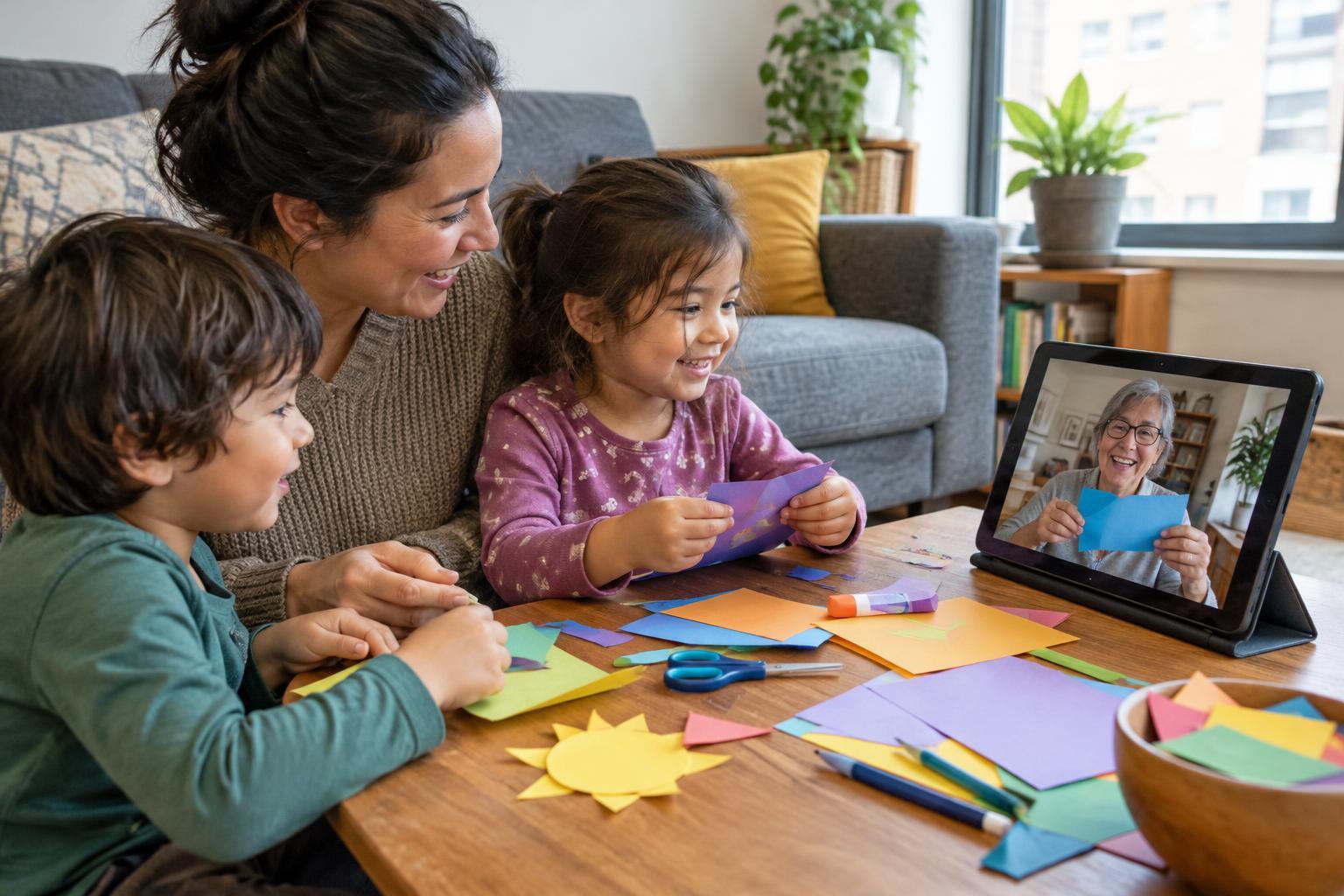
A call can feel more natural when everyone has something to do together. Instead of asking children to sit still and make conversation, invite a relative into an activity already on the family calendar. They might listen while your child shows a drawing, help choose a name for a cardboard-box spaceship or take a turn in a guessing game. The activity gives everyone a place to begin, even if they have not spoken recently.
Keep the invitation specific and manageable: “Would you like to join us for 15 minutes while we decorate cards?” is easier to plan around than an open-ended call. Ask what works for the relative, too. A phone call may be simpler than video, and a short visit may be more enjoyable than trying to keep everyone connected through an entire afternoon.
Pick an activity that works on both ends
Shared activities do not require identical supplies. For a drawing session, each household can use whatever paper and pencils it has. Take turns suggesting an animal, a place or a silly combination to draw, then describe the results over the phone or hold them up to the camera. For a story, one person can read aloud while others listen, or each person can add a sentence. If the connection is choppy, pause after each turn so no one has to talk over a delay.
Games with clear, brief turns are especially useful. Try “I spy” with objects visible in each room, a scavenger hunt for something soft or blue, or a round of questions about favorite foods. A relative could also guide a simple family recipe from their own kitchen while your household prepares its version. Choose a task that leaves room to chat, rather than one that needs constant instructions.
For younger children or anyone who does not want to be on camera, offer another way to join. They can pick the next song, hold up an object for someone else to describe or listen nearby while building with blocks. Participation does not have to look the same for everyone.
Make the setup easy to follow
Before the call, decide where the phone or tablet will sit, check that it has enough power and test whether the relative can hear from that spot. A steady surface is often more useful than moving the camera around constantly. If video is difficult, switch to audio and describe what is happening: “We’re choosing the red paper now,” or “The tower just fell over.” That small bit of narration helps a caller feel included.
Send a simple plan ahead of time with the start time, the activity and any optional supplies. If relatives live in different time zones, confirm the time in each location. Keep materials easy to find so a delayed call does not turn into a rushed search around the home. You can also agree on a natural ending, such as showing the finished project or taking one final game turn.
Let connection matter more than performance
Children may wave hello and then wander off, or they may spend the whole call explaining one tiny detail of their project. Either response is fine. Avoid asking them to perform a skill or stay on screen to prove that the visit was worthwhile. A relative can still be part of family time by talking with a caregiver while a child plays nearby, then greeting the child when they return.
It helps to offer small choices: “Do you want to show your drawing now or after the game?” A child who does not want to talk can ask an adult to share their work instead. Let relatives know that background noise, interruptions and changing attention are normal parts of a call from a family home. A warm goodbye before everyone is worn out can make the next invitation feel easier.
Keep the connection going between calls
Not every relative can join at the planned time. You might leave space for them to contribute beforehand by sending a story prompt, a recipe suggestion or a question for the family to answer during the activity. Afterward, a caregiver can share a photo of the finished craft or a brief voice message describing the game. Ask before sending images of children, and check with everyone involved before recording or sharing any part of a call.
A simple recurring tradition can make distance feel less complicated: the same guessing game on Sunday afternoons, a monthly drawing prompt or a birthday call spent looking through familiar photos. It is also fine to change the plan when family life gets busy. The aim is not a perfect virtual event; it is a familiar, welcoming way for faraway relatives to take part.