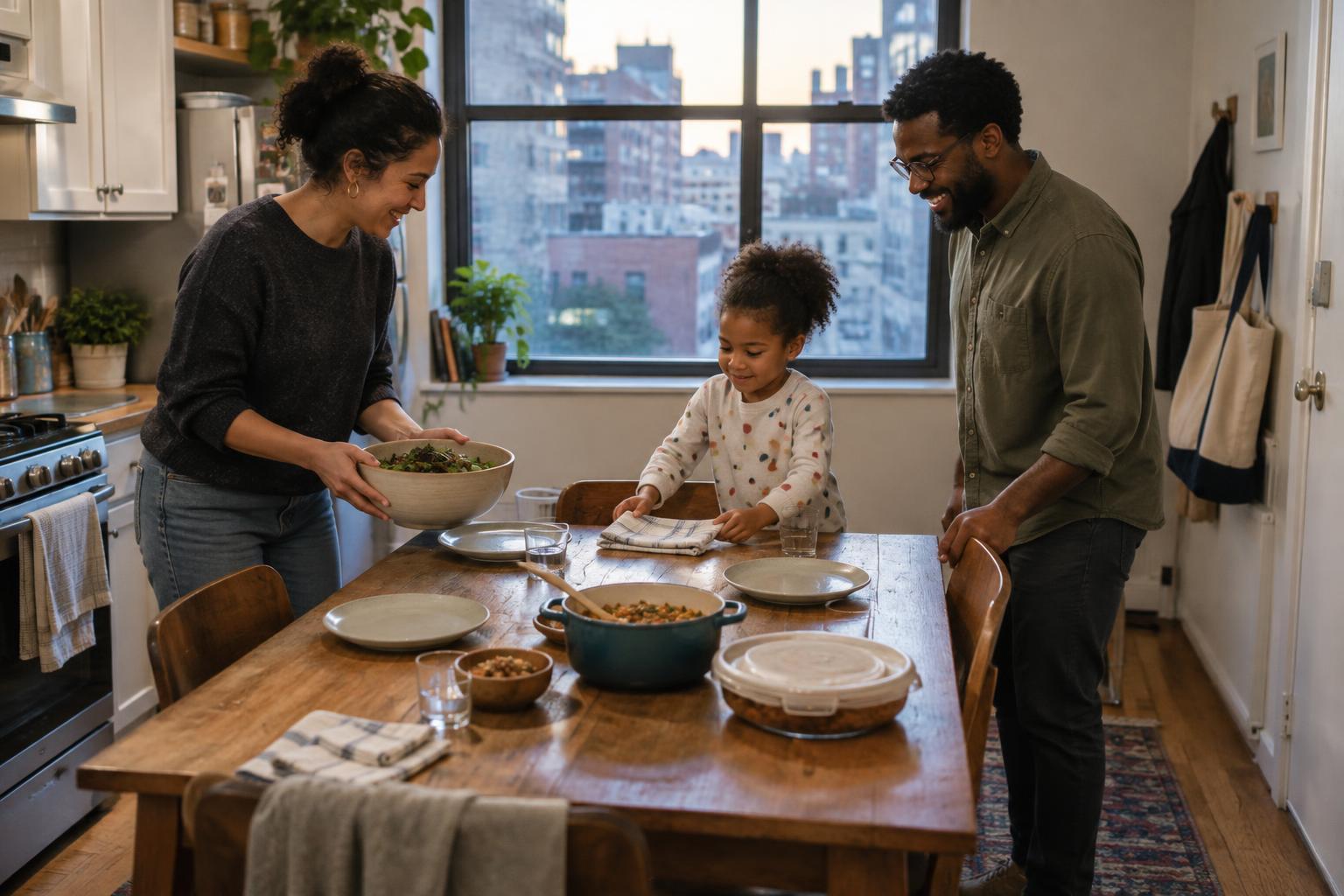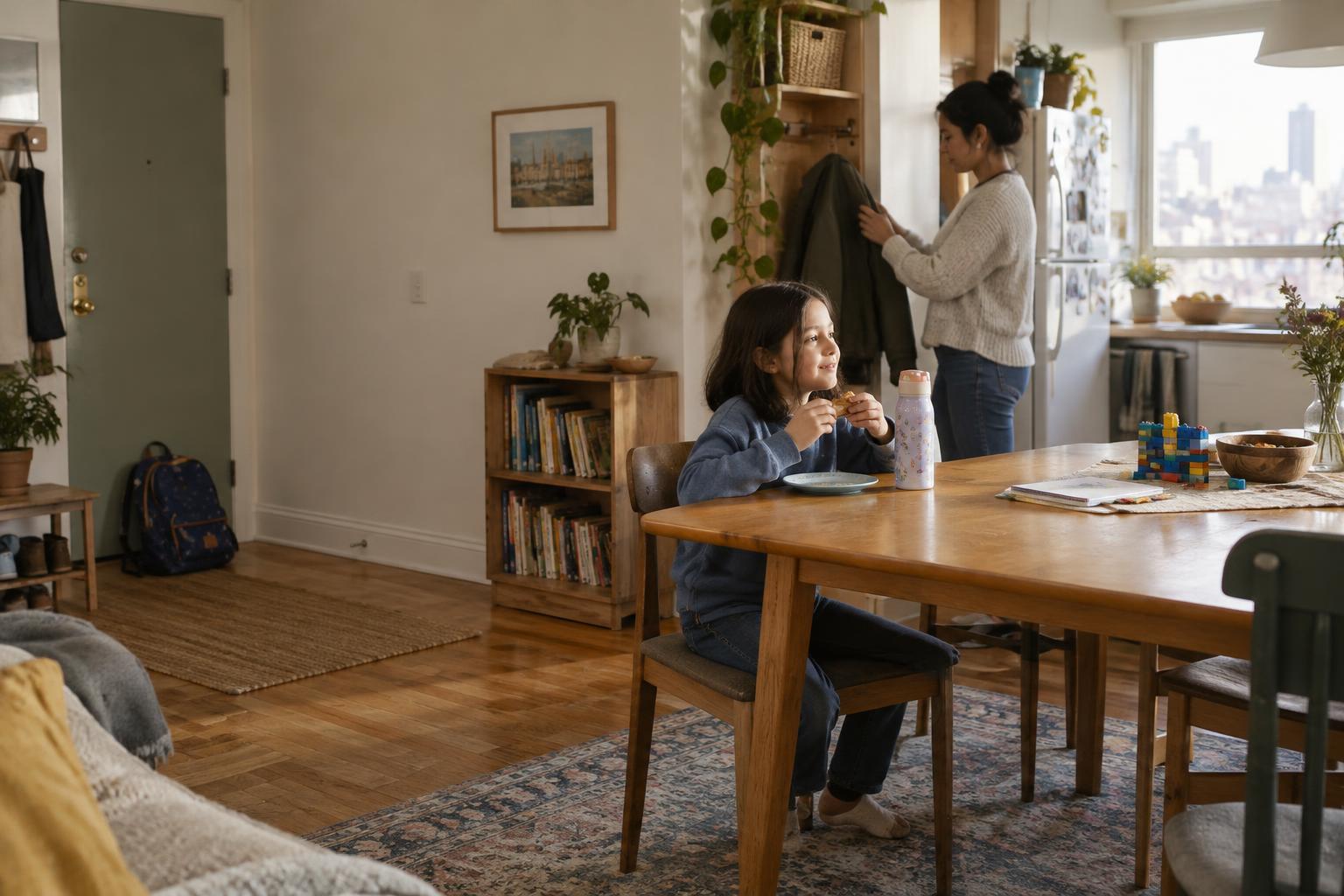
Think of an anchor as a moment, not a timetable
When work hours shift, pickup plans change, or an outing runs long, a detailed family schedule can be hard to follow. A daily anchor is smaller: something familiar that happens around a recurring moment, even if the clock time varies. It might be a brief check-in after everyone gets home, a snack before starting homework, or a book before bed.
The goal is not to make every day look alike. It is to give family members a few points of connection and predictability within days that look different. An anchor should be simple enough to fit a rushed Tuesday and still feel useful on a relaxed weekend. If it requires a perfectly timed meal, a clean living room, or everyone being present, it may be too complicated for this season.
Start with the transitions you already have
Look for moments your family encounters on most days, even when the order changes: leaving home, reuniting after time apart, preparing food, or settling down for sleep. Then ask where a small repeated action would make that transition easier. If mornings are unpredictable, a goodbye phrase at the door may be more dependable than a full breakfast routine.
Choose one or two anchors to begin. You might put bags and keys in the same spot when you come in, then spend five minutes sharing one thing about the day. For a younger child, the check-in could happen while washing hands or setting out a snack. For an older child, it might happen during a walk from the bus or subway. The setting can change; the familiar invitation stays.
Make each anchor easy to shrink or move
A flexible anchor has a full version and a short version. A bedtime reading anchor might mean two chapters when there is time and one page when everyone gets home late. A meal-prep anchor might mean cooking together on a quiet evening and letting a child choose between two easy options on a busy one. Both versions count.
It also helps to tie an anchor to an event rather than an exact hour. “After we get home, we put our things away” can work across different pickup times. “Before we turn out the light, we say goodnight” can happen wherever a child is sleeping that night. If caregiving is shared, describe the anchor in a sentence that another adult can easily use, without requiring them to copy your style.
Invite participation without adding another chore
Children may be more willing to join a routine when they have a small choice within it. They could choose the song for a quick tidy-up, pick which question everyone answers at dinner, or decide whether to read on the couch or in bed. Caregivers can also ask which parts of the day feel rushed and whether a familiar step would help. A routine works best when it serves the people using it, rather than becoming another task to enforce.
Keep the supplies modest. A basket by the door, a short list on the fridge, or library books within reach may be enough. In a small city home, an anchor does not need a dedicated room or elaborate setup. If putting everything away each evening creates more friction than it solves, try a single landing spot for the items needed tomorrow.
Review what helps, and let the rest go
After a week or two, notice which anchors happen with little effort and which ones you keep having to rescue. An anchor that repeatedly clashes with a shift change or an activity may belong at a different transition. If a child resists a routine, consider whether it is too long, too rigid, or arriving when everyone needs a break. You can shorten it, move it, or replace it.
Some days will skip even the smallest plan. That does not undo the routine. The value of an anchor is that you can return to it without catching up or making up missed steps. Over time, a few repeatable moments can help a changing schedule feel more manageable while leaving room for the unexpected parts of family life.