Start with the space you actually have
An entryway drop zone is simply a designated place for the things everyone carries through the door. In a Queens apartment, that might be a narrow strip beside the door, one end of a hallway or a corner of the living room. You do not need a matching set of organizers. You need a layout that lets people enter, put things down and move through the space without stepping over shoes or searching for a hook.
Watch a few ordinary arrivals before rearranging anything. Where do shoes already pile up? Where do backpacks land? Those spots may be more useful than the location that looks best in a photo. Check that the door can open fully and that the route through the home stays clear. Measure both the floor area and the height available, especially if a radiator, intercom or light switch limits your options.
Give each everyday item a landing place
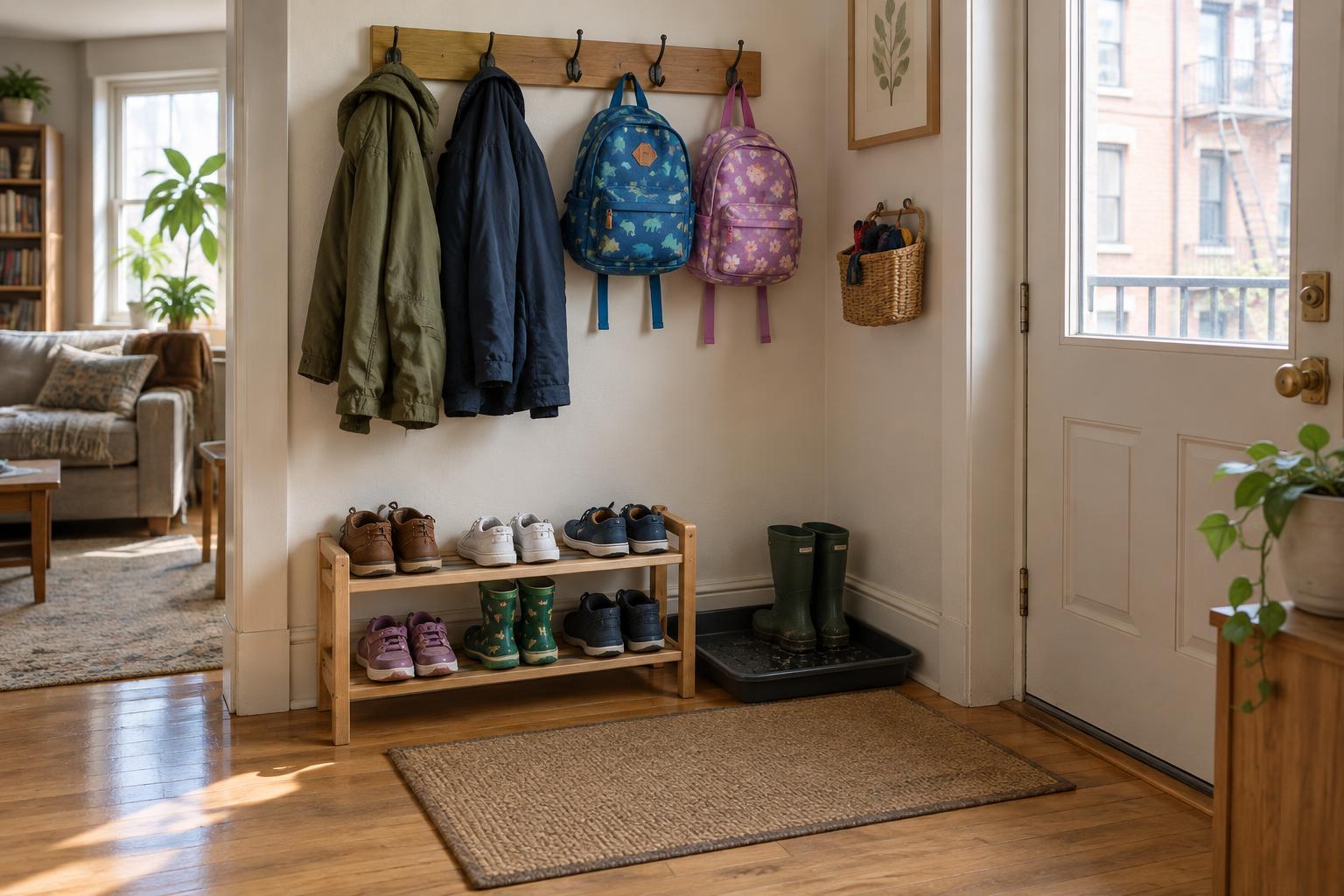
Organize by what needs to happen at the door. A low shoe tray or washable mat contains pairs that are worn regularly; less-used footwear can live elsewhere. Hooks make coats and backpacks visible and quick to put away. A small bowl, shelf or wall pocket can hold adult essentials such as keys and transit cards. Keeping those items together reduces the last-minute hunt, but avoid turning the shelf into storage for every loose object in the home.
Assign each family member a hook, cubby or clearly marked section if space allows. A picture label can help a child identify a spot without relying on reading. Put frequently used items within easy reach, while keeping heavier bags on sturdy, appropriately installed hooks or a low shelf. If wall mounting is not an option, a stable freestanding rack may work, provided it does not block the walkway or tip when a bag is lifted.
Make room for wet and messy days
The best drop zone can handle a rainy pickup as well as a calm weekend. Choose a surface under shoes that is easy to wipe, and leave a place for damp coats or umbrellas to dry without soaking backpacks and papers. A tray can catch drips from boots; a washable bin can temporarily hold outdoor items that need attention. Empty and dry containers as needed rather than letting moisture collect.
It also helps to separate things coming into the home from things going out. A small return basket can hold a library book, a permission slip or an item meant for a neighbor. Keep it limited to things that need to leave soon. If the basket overflows, sort it rather than adding another one. In a tight entryway, a short list posted near the door may take less space than a bin.
Build a routine around real arrivals
Storage works better when the routine is short enough to repeat. Try a simple sequence: shoes on the tray, coat on the hook, backpack in its spot, then hands free for the next part of the day. Adults can model the same pattern with their own bags and outerwear. For a younger child, one clear task may be more manageable than several instructions delivered at once. The goal is a dependable place for belongings, not a perfectly tidy doorway at every moment.
Pair the drop zone with a brief evening reset. Check backpacks for anything that must come out, return stray shoes to their places and put next-day items in the outgoing spot. This need not become a major chore: even a couple of minutes can keep the area ready for morning. If the routine repeatedly breaks down, look at the setup first. A hook that is hard to reach or a bin with a lid may be asking for an extra step nobody wants to take.
Keep the system small enough to maintain
An entryway can only hold so much. Decide how many pairs of shoes and coats belong there at one time, then move extras to a closet or another storage spot. Seasonal changes are a useful prompt to swap what is close at hand. Leave a little open space for a guest’s coat or an unexpectedly bulky bag; filling every inch can make the area harder to use.
After a week or two, notice what still lands on the floor. That item may need its own spot, or its assigned spot may need to move. Adjust one thing at a time rather than buying more storage immediately. A useful drop zone is not the most elaborate one. It is the one your household can find, reach and reset on an ordinary busy day.