Make the evening smaller
Some evenings, getting home, eating, and finding clean pajamas already feels like plenty. Family time does not need to mean an elaborate craft or a trip across the neighborhood. Ten comfortable minutes together can be easier to enjoy than an activity everyone is too tired to finish. The goal is not to make the evening memorable on command; it is to find a little room to connect without creating more work.
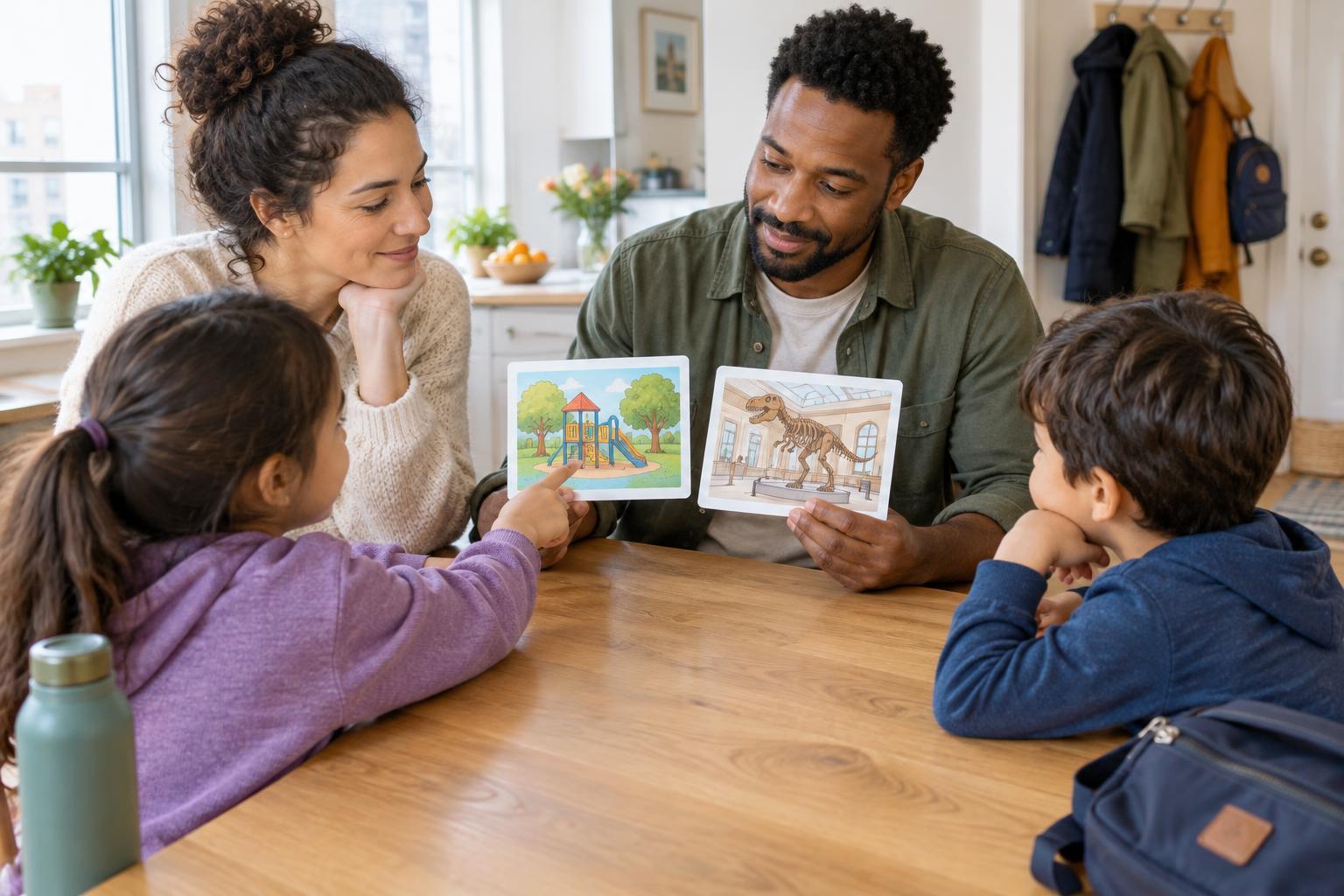
Start by lowering the setup. Choose something that uses what is already nearby, can stop at any point, and will not require much cleanup. In a small apartment, that might mean staying at the kitchen table or spreading a blanket on the floor. Give children a choice between two manageable options rather than asking an open-ended question: “Would you rather tell a story or play a guessing game?” If everyone needs quiet, it is fine to say so and pick an activity that fits.
Try games you can play from the couch
A guessing game needs no supplies. One person thinks of an animal, a food, or a place the family knows, and everyone else asks yes-or-no questions. For younger children, offer clues instead: “It is something we saw on our walk,” or “You can find it in the kitchen.” Keep the rules loose. A round can last two minutes or twenty, depending on the energy in the room.
Another option is a tiny scavenger hunt. Ask everyone to find something soft, something blue, or something that makes them smile. Children can bring one item back to show the group, so no one has to race around the home. If leaving the couch sounds better, play “I spy” with objects already in view. These games give everyone a way to join in, but they also let a tired caregiver participate while sitting down.
Share stories without making a production of it
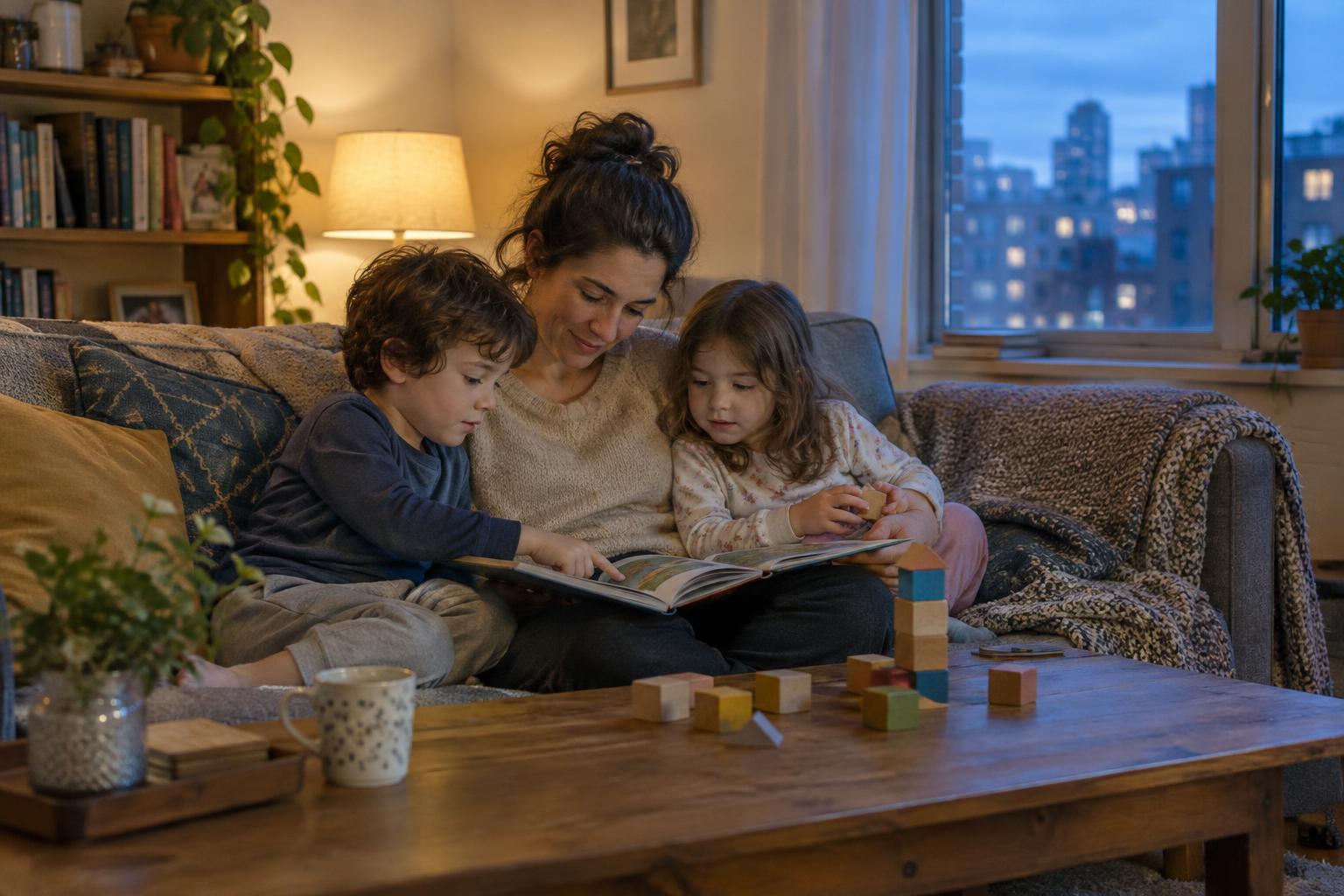
Reading aloud can be as simple as revisiting a familiar picture book. There is no need to finish it. You can look at one page and ask, “What do you notice?” or invite a child to choose a character’s voice. If reading feels like too much, take turns inventing a story one sentence at a time. A prompt such as “A pigeon found a mysterious key” is enough to get started. Silly answers count, and the story can end whenever someone decides the characters are ready for bed.
Quiet conversation can work just as well. Try a gentle question that does not demand a full report of the day: “What was one funny thing you noticed?” or “If we could put a snack stand anywhere, where would it go?” A child who does not feel like talking can draw an answer or simply listen. For some families, sitting together while music plays is the whole activity. Being together does not always require everyone to speak.
Keep hands busy and cleanup short
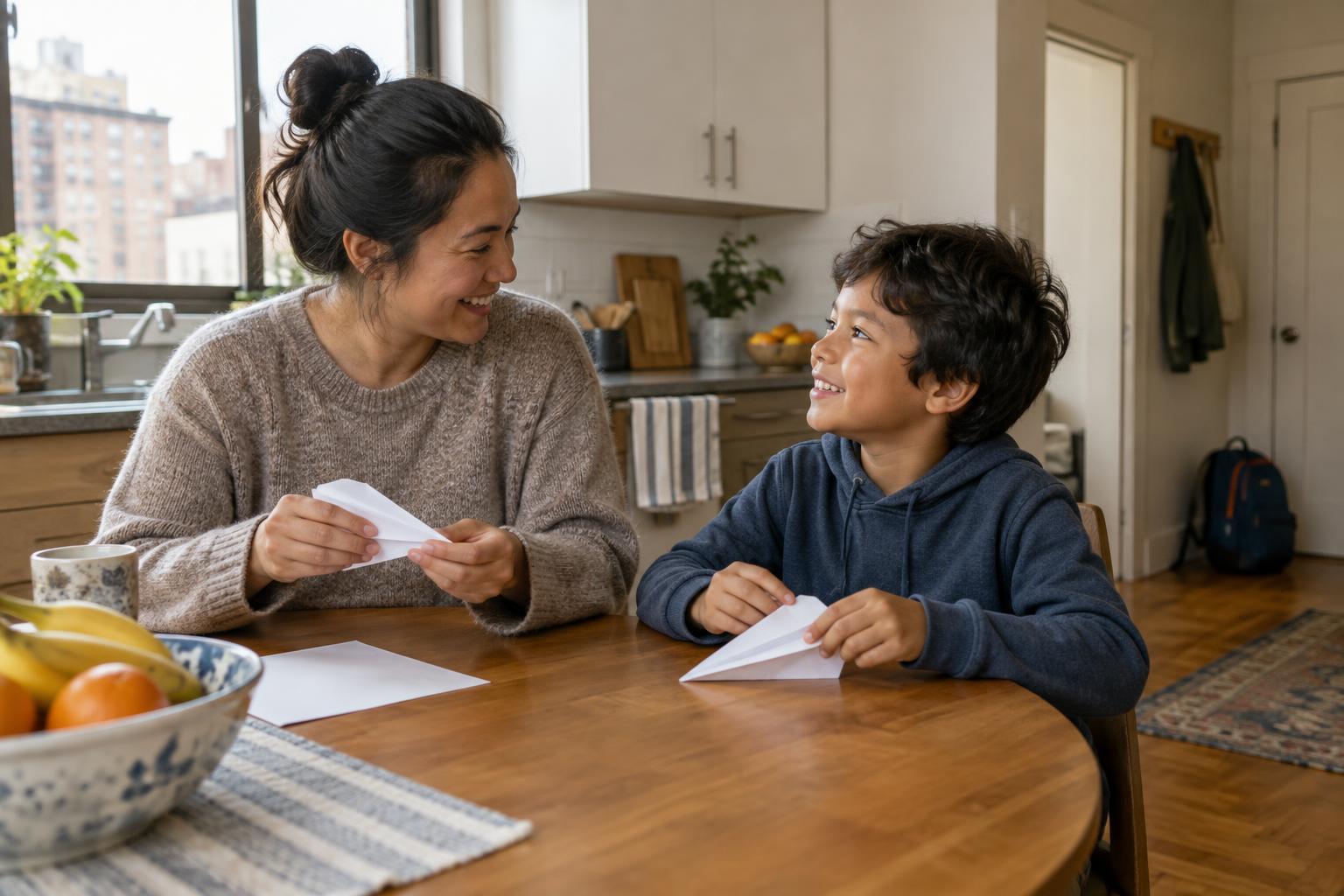
When children want to make something, put out a small number of materials: a few sheets of paper and crayons, for example. Suggest drawing a made-up storefront, designing a bus for imaginary passengers, or creating a menu for tomorrow’s breakfast. There is no need to save every creation or turn it into a project. A single tray or folder can hold the supplies, and putting them away can be part of the activity.
You can also invite children into a calm household task without pretending it is a game they must enjoy. Pair socks while naming imaginary owners, line up books for bedtime, or set out cups for the morning. Offer a small role and let them opt out if they are spent. On the most tiring nights, a short stretch together, a shared snack, or one song before the usual routine may be enough. An activity is useful if it suits the people who are actually there that evening.