Start with a routine you can repeat
The hardest part of screen time is sometimes not deciding when it starts, but getting everyone through the moment it ends. A child may be absorbed in a story or game just as a caregiver needs to start dinner, leave the apartment or get ready for bed. A predictable routine will not make every ending cheerful, but it can make the expectation clearer: screen time has a place in the day, and there is a familiar way to finish it.
Choose a time or event that makes sense for your household, such as one episode after school or a short game before the evening meal. Keep the plan realistic for weekdays and for the adult who will help carry it out. If the schedule changes often, use a flexible cue instead of an exact clock time: “Screens go away when I begin making dinner” may be easier to follow than a minute-by-minute rule.
Agree on the stopping point before pressing play
A transition is easier to understand when its ending is named at the beginning. Before a video starts, say whether the plan is one episode, one round or a set amount of time. For younger children, keep the language short: “After this episode, we put the tablet on the shelf.” Older children may want to help choose a stopping point that fits the activity, such as finishing a level rather than stopping in the middle of it.
Look for ways to avoid an endless next item. Turn off autoplay if it repeatedly pulls your family past the agreed stopping point, and check the length of a show before offering it when time is tight. When a game cannot be saved quickly, build in a few minutes to reach a pause point. The goal is not a perfect limit; it is an ending that the child has had a chance to anticipate.
Make the last few minutes visible
A brief reminder gives children time to shift their attention. Try a warning at a point that is meaningful to them: “This is the last song,” or “When this round ends, it is time to stop.” A timer can help if it feels neutral rather than like a threat. Let the child see you set it, then use the same simple phrase when it sounds. For some activities, an episode ending or a completed level may work better than a timer that interrupts the action.
Keep your response steady when the moment arrives. You can acknowledge disappointment without reopening the decision: “You wanted more time. We are stopping now, and we can talk about when you will play again.” If a child needs help closing an app or putting away a device, offer a small choice: “Would you like to turn it off, or would you like me to?” Choices about how to finish can preserve some independence without making the limit unclear.
Give the next part of the day a clear shape
“Screen time is over” describes what is being lost, but not what comes next. Name the next step before the ending arrives: shoes by the door, a snack at the table, bath toys in the tub or a book on the couch. If the next task is not especially appealing, a small bridge can help. A child might carry a favorite toy to the kitchen while dinner starts or choose which book will be read after pajamas.
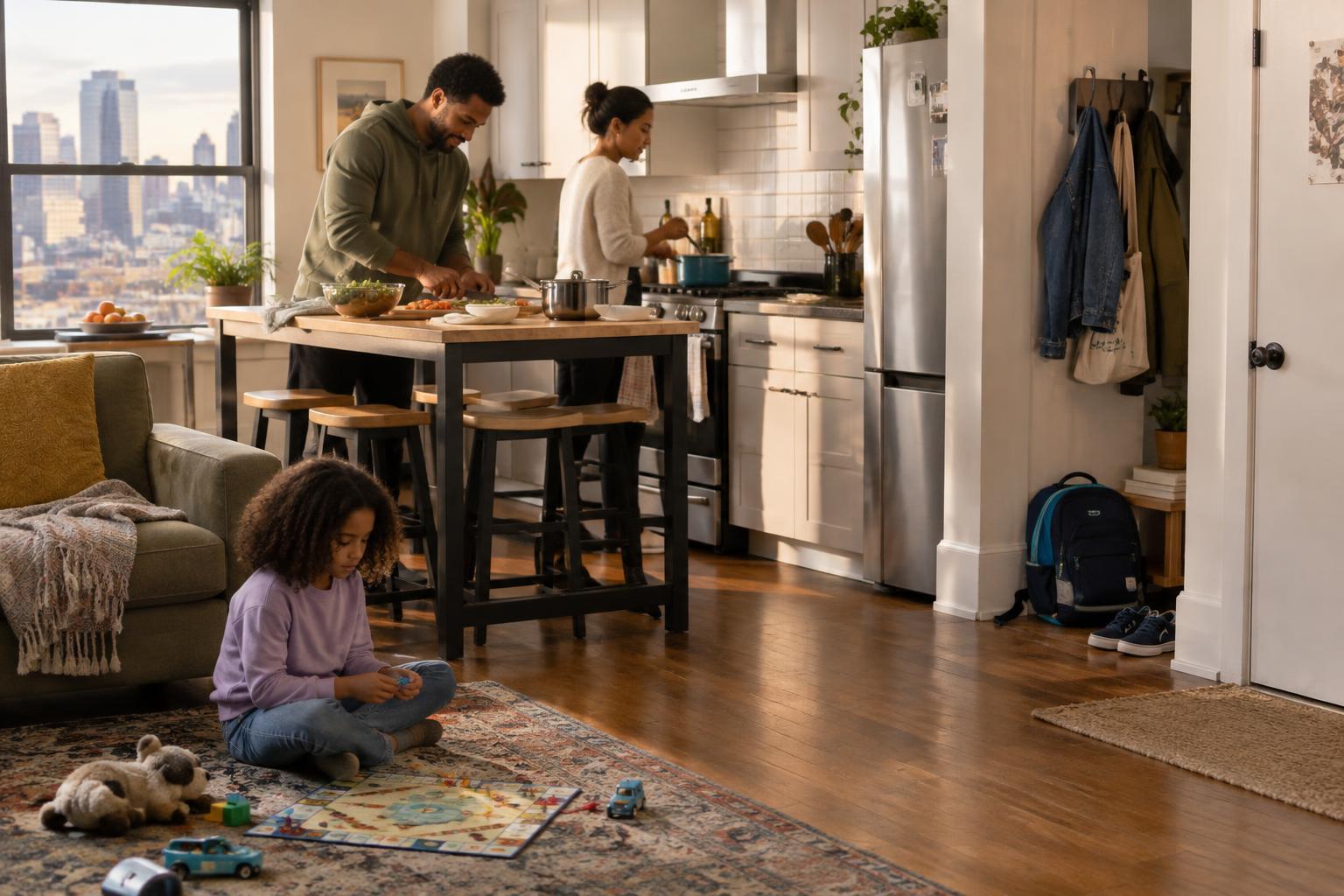
In a busy city home, the transition does not need an elaborate activity. A basket of drawing supplies, a familiar playlist or a few minutes helping prepare a snack may be enough. Keep the option easy to reach so the adult is not searching for materials while also managing the device. When possible, offer the same next step for several days; familiarity is part of what makes a routine predictable.
Adjust the plan without abandoning it
Even a clear routine can meet resistance, especially when someone is tired or the day has been unusually demanding. Try to notice which part is difficult. Does the child need an earlier warning? Is the chosen show too long for the available window? Is screen time ending just as the household becomes hectic? Changing the setup may be more useful than repeating the rule more loudly.
There will also be days when the plan bends: a long trip, a caregiver finishing a task or a family movie night. Say what is different, then return to the usual routine when you can. Consistency does not require every day to look identical. It means children can generally count on knowing when screen time starts, how it ends and what happens afterward.