Start with a small plan
A farmers market offers plenty for children to notice: bright produce, unfamiliar herbs, busy shoppers and conversations with the people behind the stalls. It can also feel crowded or overwhelming, especially on a first visit. Treat the trip as a short outing with a shopping goal, rather than a mission to inspect every table. Buying ingredients for one meal or choosing one fruit to try is enough.
Before leaving, check the market’s location, hours and any available information about entrances, bathrooms and payment options. If you are traveling by bus or subway, think about what you can comfortably carry home. A list of two or three items gives the visit direction while leaving room for a discovery. Let kids know the plan in simple terms: “We’ll look around, pick vegetables for dinner and head home.”
Pack for hands-free browsing
Bring a sturdy tote or backpack, a small amount of cash if you have it, and whatever you normally need for a brief city outing. Not every stall may accept the same forms of payment, so it helps to ask before choosing items. Water and a familiar snack can make it easier to browse without turning every display into a request to eat immediately. In warm weather, plan how you will get perishable purchases home without a long detour.
Consider the space you will need to move through the market. A stroller can carry supplies, but a narrow or crowded aisle may call for extra patience. If your child is walking, agree on a simple rule before entering, such as staying beside you and asking before touching produce. Choose an easy meeting point, like a sign near the entrance, and tell older kids to return there with a trusted adult if you become separated.
Give kids a useful role
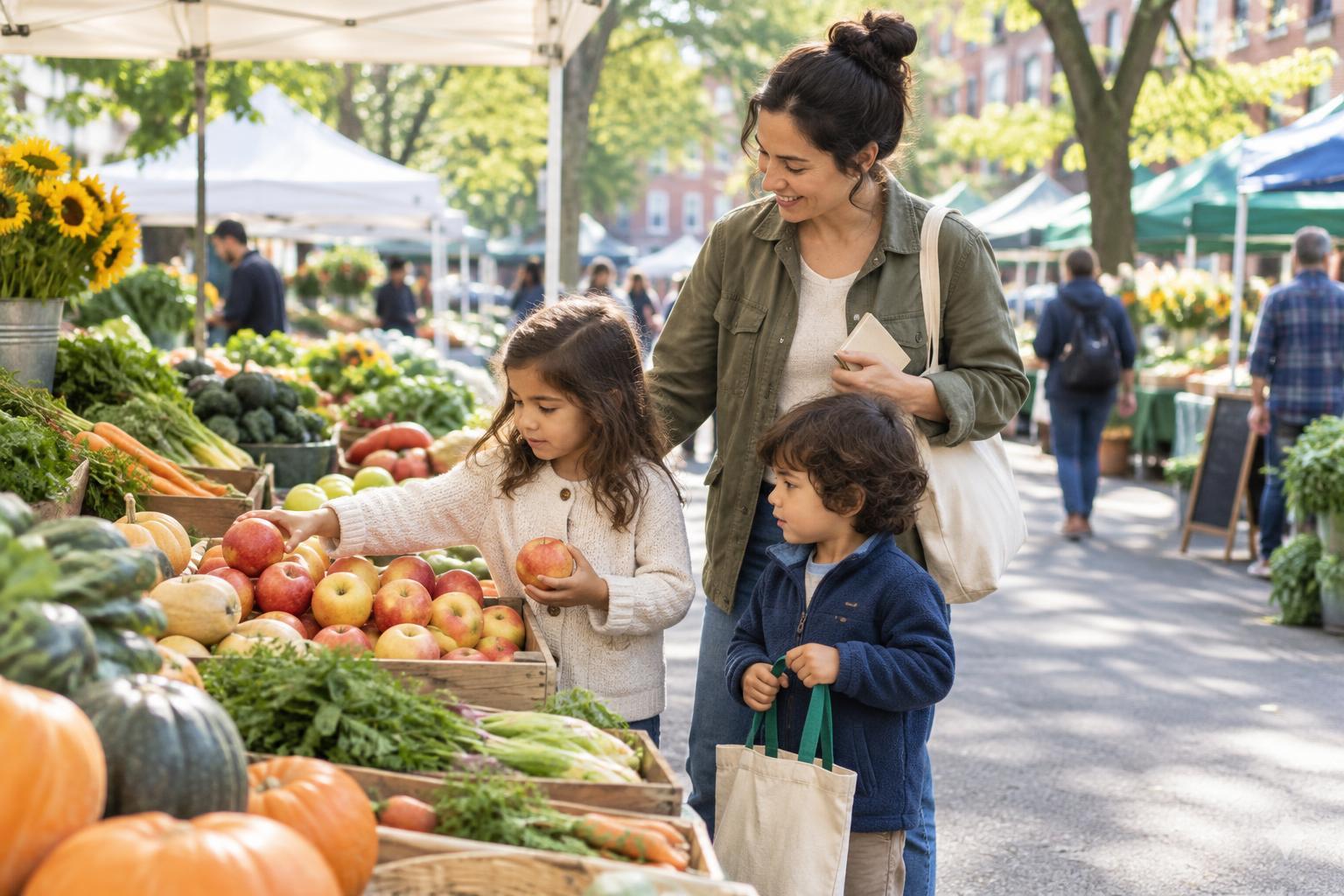
Children often enjoy a market more when they have something specific to do. A younger child might spot three colors of vegetables or help count apples into a bag. An older child might compare the price of two similar items, read a sign or help decide which ingredient fits your dinner plan. These small tasks make the outing feel participatory without putting pressure on anyone to turn it into a lesson.
Invite questions, but keep interactions considerate. Kids can ask a vendor what an unfamiliar vegetable is called or how people commonly prepare it when the stall is not busy. Remind them to let the vendor handle any samples and to ask before picking up delicate items. If a child loses interest, shift to a simpler goal: buy what you came for, notice one new thing and call it a successful visit.
Browse within a budget
A market’s variety can make it tempting to buy a little of everything. Decide on a rough spending limit before you arrive and share an age-appropriate version of it with your child. You might offer a choice between two affordable options: berries for a snack or tomatoes for lunch. That gives kids a real decision while keeping the purchase manageable.
Walk past a few stalls before buying if your group has the patience. You can see what looks appealing, compare quantities and decide what you are likely to use. If the market is busy or a child is tired, there is no need to complete a full circuit. Buy the items on your list and leave on a good note. A pleasant twenty-minute visit is more likely to inspire another trip than a long outing that ends in frustration.
Bring the market home
The outing does not have to end when you leave the stalls. At home, invite kids to help unpack, sort purchases or choose where to put them. Wash produce as you normally would before serving or preparing it. If you bought something unfamiliar, try it alongside a familiar food or use it in a simple recipe your family already knows.
Later, ask what your child remembers: a color, a smell, a question they asked or the item they chose. You can use that memory to shape the next visit. Perhaps next time you bring a shorter list, go at a quieter time or let your child choose an ingredient for breakfast. There is no ideal way to “do” a farmers market with kids. A little preparation and permission to leave when you are ready can make it a repeatable part of city family life.