Start with the whole trip, not just the destination
A museum, playground, or waterfront path may look close on a map, but the full journey matters more than the distance from home. Think through each part: getting to the station or stop, waiting, riding, transferring, walking to the entrance, and making the return trip. A destination with a slightly longer ride and a short, straightforward walk may feel easier than one that requires several transfers.
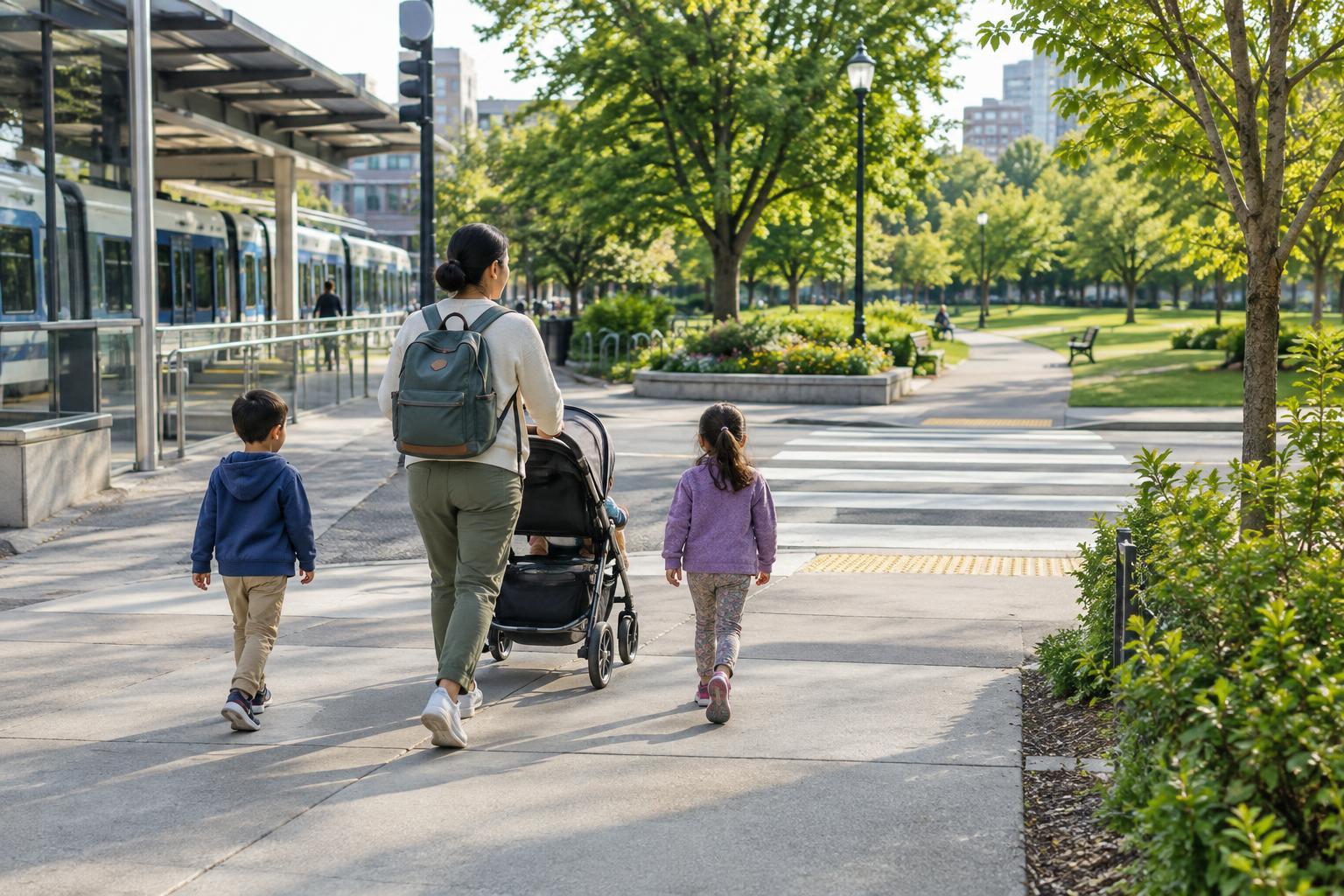
Choose an outing that fits the energy your family has that day. If you are traveling with a stroller, consider whether the route depends on stairs or an elevator. If a child prefers to walk, look for wide sidewalks and places to pause. With more than one child, a route that is easy to explain and follow can make the day calmer.
Look closely at the last few blocks
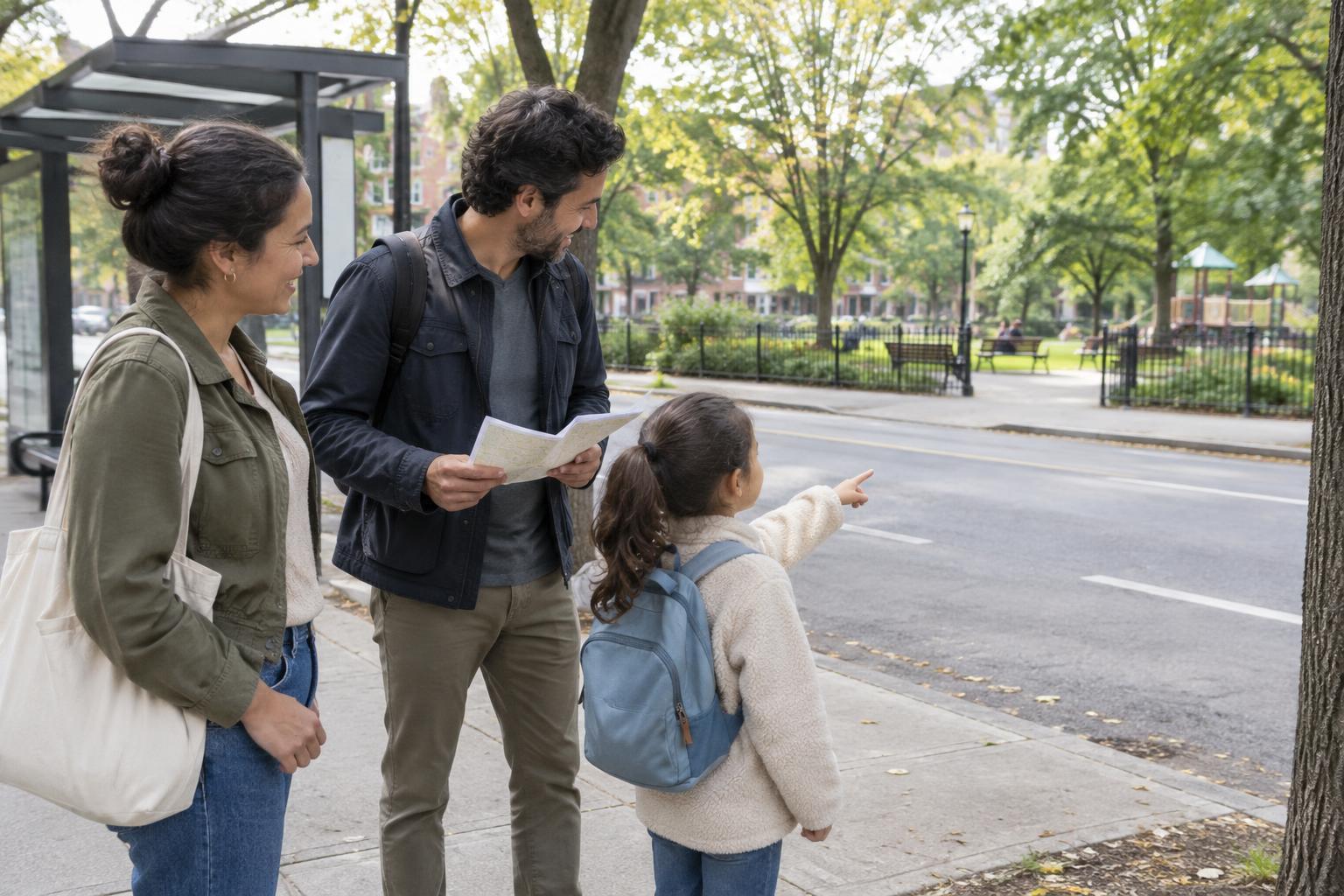
“Near transit” can mean different things to different families. Before settling on a destination, look at the walk from the stop to the activity. Check where the entrance is, whether you will need to cross a busy street, and whether the route offers a comfortable place to stop. Also consider the walk back, when everyone may be more tired.
It helps to identify one useful landmark between the station and your destination, such as a library, public plaza, or recognizable corner. That gives children a simple way to understand where they are going. If the final walk seems too demanding, look for another entrance, a different stop, or an alternative destination rather than treating the walk as an afterthought.
Choose a destination with room to adjust
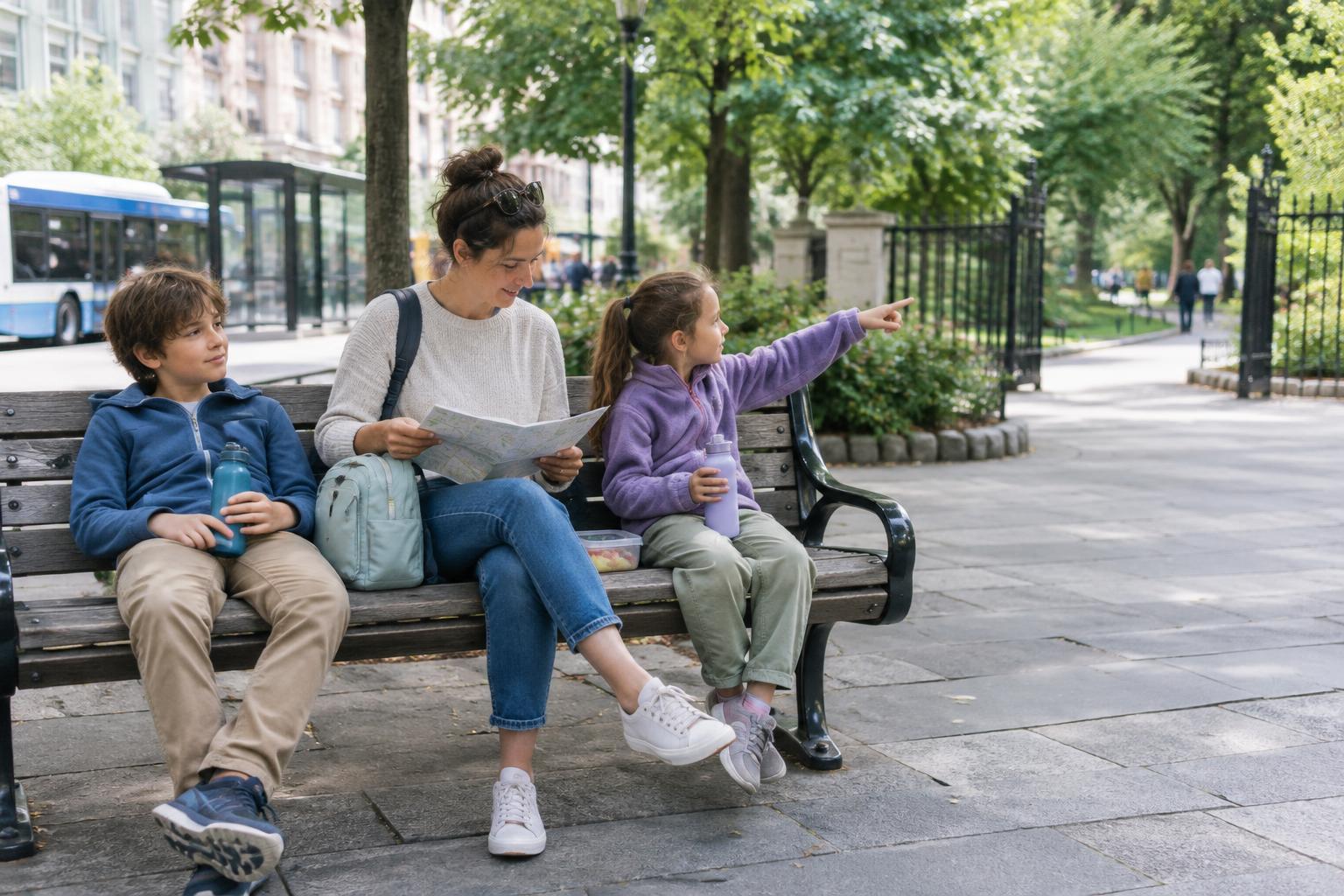
The most forgiving outings offer more than one way to spend an hour. A park with both open space and a place to sit lets you switch between active play and a snack break. A library near a small outdoor area can work whether your family wants a quiet visit, fresh air, or a little of both. You do not need to fit every option into one day; having choices simply makes it easier to respond to changing moods.
Before leaving, check practical details that could shape the visit, such as hours, admission requirements, restroom access, and whether food is allowed. Details can change, so use the destination’s own visitor information when planning. If amenities are limited, decide whether a shorter visit would still be worthwhile.
Pack for independence, not every possibility
Car-free travel is easier when the essentials are easy to carry and reach. Water, a snack, weather-appropriate layers, and a small activity for waiting may cover many ordinary outings. Keep transit fare or passes accessible, and give frequently needed items a consistent place in your bag. A lighter load can leave you with a free hand for a child or a stroller.
For younger children, involve them in one manageable job, such as carrying their own small water bottle or watching for a familiar stop name with an adult. Older children can help compare two possible routes or spot the exit sign. These small tasks give them a role in the trip without making them responsible for navigating it.
Make the ride home part of the plan
It is tempting to plan around the most exciting part of the day and assume the return will take care of itself. Instead, decide in advance what will signal that it is time to leave: finishing a snack, completing one last activity, or reaching a time you have chosen. Leaving while everyone still has some energy can be more pleasant than squeezing in one more stop.
Save or note your return route and a reasonable backup before you go, especially if the trip involves a transfer. Allow time for an unexpected wait, and know where you could take a break near the return stop. A successful outing does not have to be long. If the ride, a little exploration, and an easy trip home all work for your family, you have found a destination worth keeping on your list.