Start with the room, not the storage product
A toy-storage system has two jobs: help children find what they want to play with and help everyone put it away afterward. In a city home, it may have a third job: let a living room or bedroom serve several purposes without toys taking over every surface. Before buying shelves or bins, notice where play actually happens. A neat setup across the apartment will be less useful if toys usually end up beside the sofa.
Look at the space available at a child’s height, the kinds of toys you have, and who handles cleanup. A few sturdy, frequently used toys need a different home from a large collection of small pieces. You also do not need one storage style for everything. Open shelves and closed bins solve different problems, and a combination is often easier to live with than an all-or-nothing choice.
When open shelves make sense
Open shelves put toys in view. That can make it easier for children to spot a puzzle, a stack of blocks, or a basket of pretend-play items without emptying several containers. Shelves also give each item a visible place to return to. If you want children to help with cleanup, keep everyday choices on low shelves and leave enough space that putting something back does not require careful stacking.
The trade-off is visual clutter. Even an orderly shelf can make a shared room feel busy when every toy is on display. Shelves may also invite children to pull down more than they can use at once. If that happens in your home, try showing fewer choices rather than adding more rules. Put one or two types of toys on each shelf and keep the rest elsewhere until you are ready to swap them.
Check that a shelving unit suits its location and can be secured or stabilized as appropriate, especially if children may reach or climb near it. Heavier items belong low down. Choose shelf spacing that lets hands lift toys out easily; a display that looks tidy but is difficult to use will not stay tidy for long.
When closed bins earn their space
Closed bins are useful for toys that come with many pieces, look messy when spread out, or are used only occasionally. They can help a shared room feel calmer at the end of the day. A bin can also travel from a closet to the play area and back, which is handy when floor space is limited.
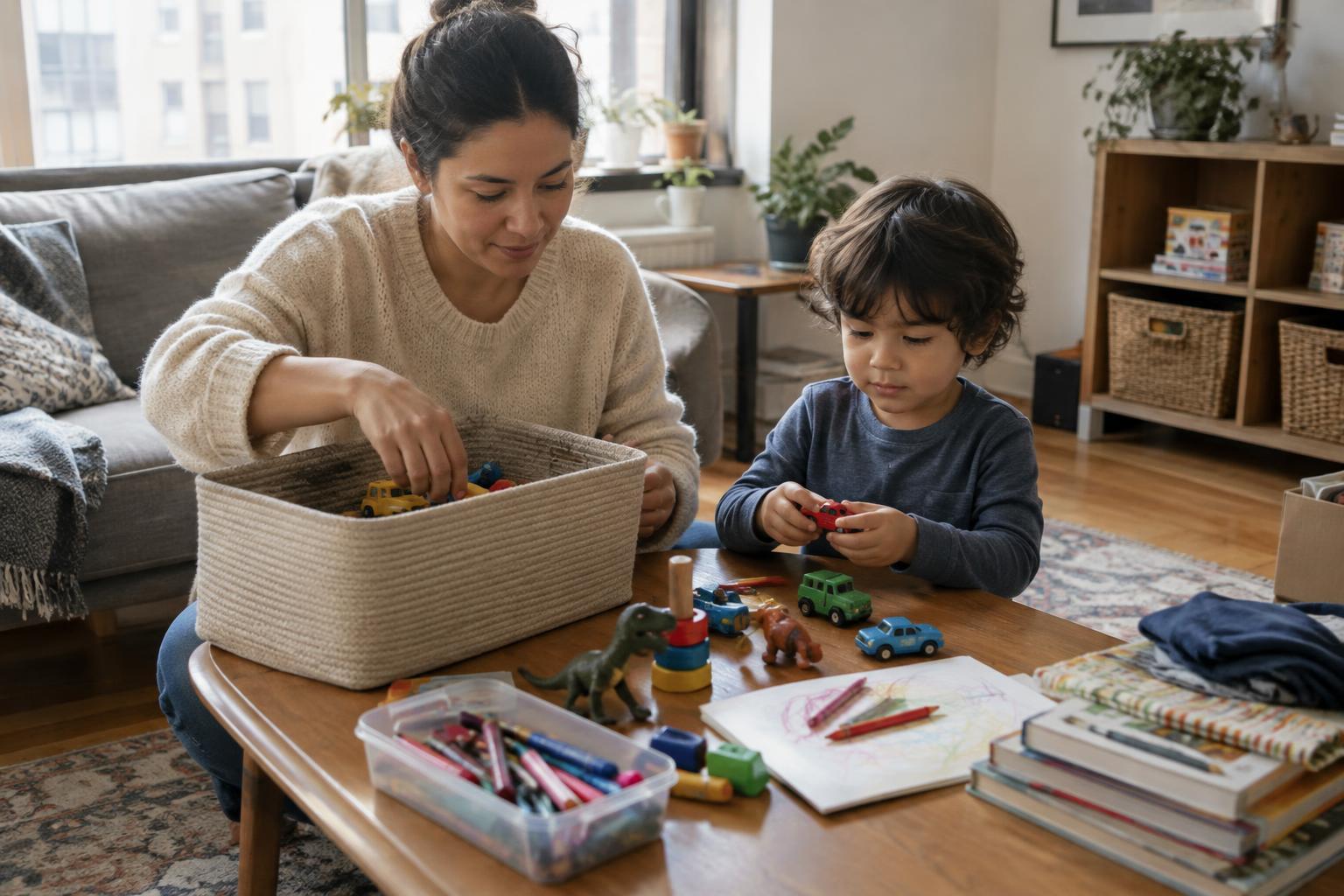
The challenge is knowing what is inside. Deep, opaque bins can become places where small toys disappear, while an overflowing bin makes it hard to put anything away. Group contents by a category a child would recognize, such as vehicles or art supplies, and use a simple word or picture label if it helps. Smaller containers inside a larger bin can separate tiny pieces, but avoid making the system so detailed that cleanup becomes a sorting project.
Think about lids, weight, and access as well. A bin that a child can open and carry comfortably is more useful for independent play than one that requires an adult to lift it down. If you stack bins, keep the most-used ones easy to reach and make sure the stack is stable.
Build a system around daily play
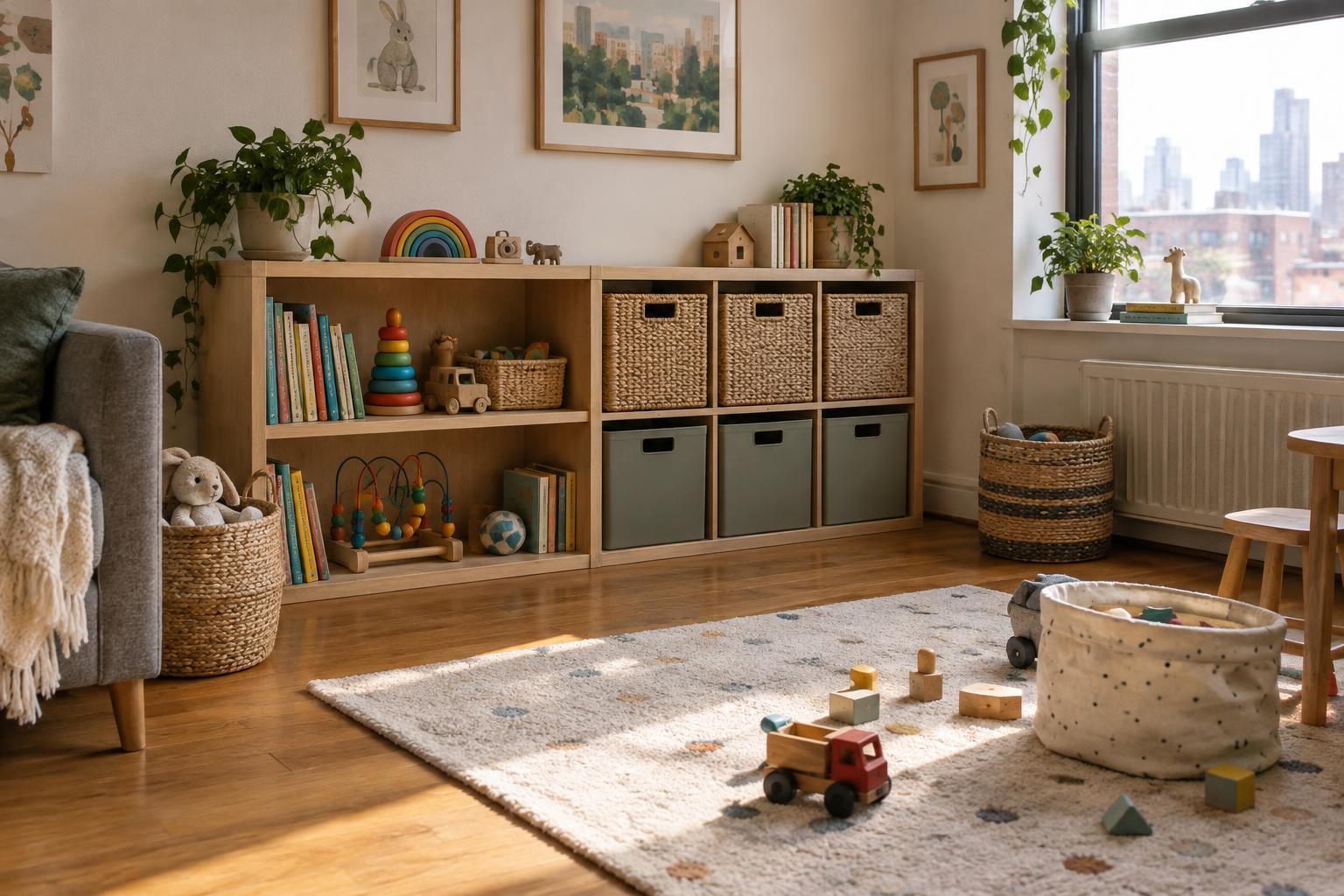
A practical starting point is to give everyday toys the easiest storage spots. Keep a small selection on an open shelf or in open-topped baskets, then use closed bins for sets with loose pieces and for toys you are not offering right now. This lets children see inviting options while giving the room a place for less-used items.
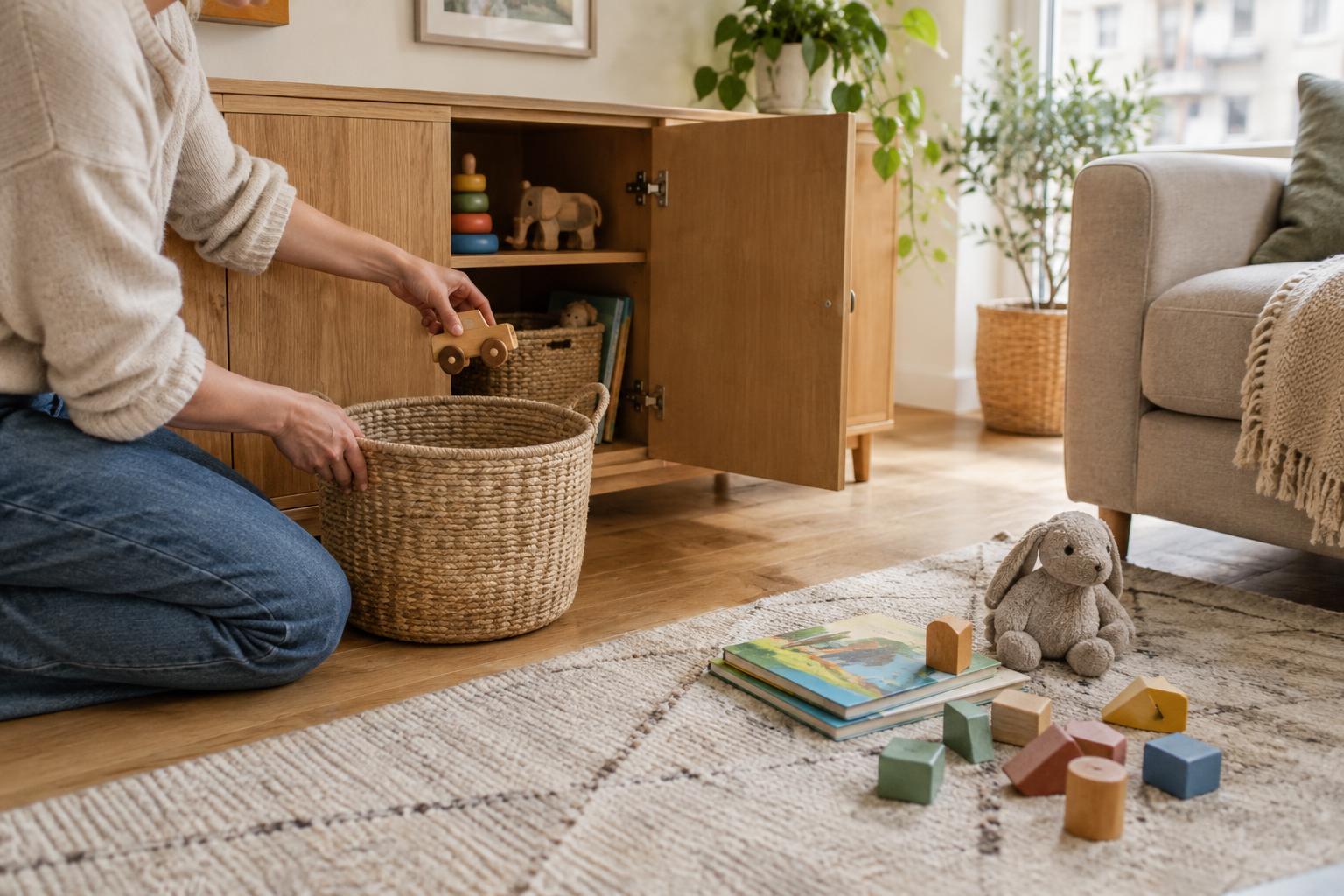
Set up a clear landing zone near where play ends. If building happens on the rug, a basket beside it may work better than a perfectly organized cabinet in another room. For shared spaces, consider whether storage can fit along a wall, under a table, or in a closet without blocking a walkway. Measure the space and the toys before choosing containers; a narrow bin that fits the room is not helpful if the toys cannot fit inside it.
Adjust the setup as your household changes
You can test a system without replacing everything at once. Start with containers you already own, give a few popular toys obvious homes, and see what happens during an ordinary week. Notice which items children can find and put away, which bins turn into mixed piles, and which toys repeatedly land outside the storage area. Those patterns tell you more than an idealized picture of a tidy room.
Cleanup is easier when the expectation is simple: toys go back to a recognizable place, not necessarily into a perfect arrangement. As interests change, move categories, reduce what is on display, or make room for a new favorite. The better choice between shelves and bins is the one that fits your available space, keeps play accessible, and asks no more maintenance of your family than it can comfortably manage.